

















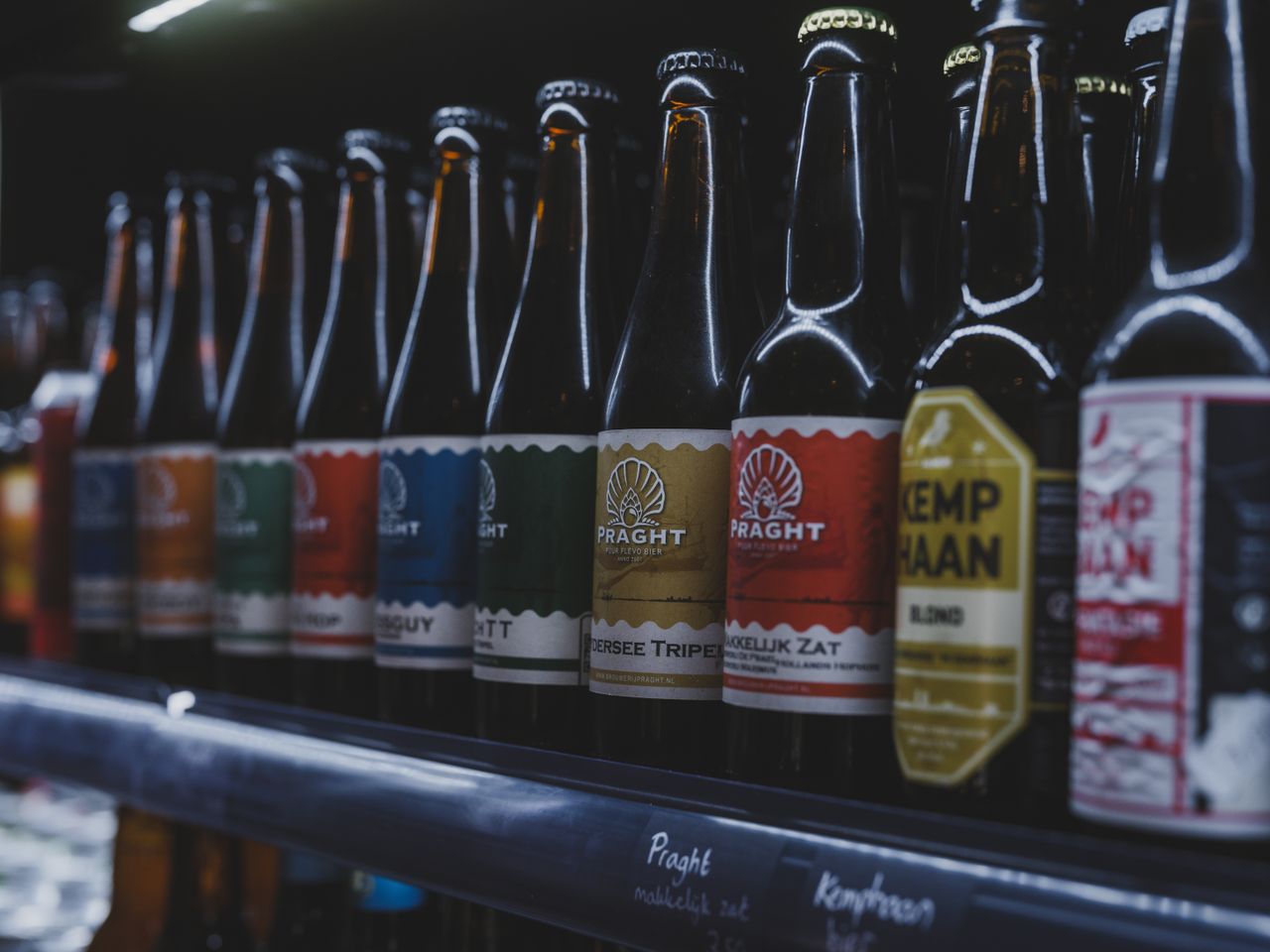
We’ve all been there: you’re cleaning out the back of the refrigerator and stumble upon an forgotten six-pack of craft IPA, or perhaps a lone bottle of a seasonal stout from last winter. Your immediate reaction might be a mix of excitement and hesitation. You want to drink it, but a burning question stops you: How long does beer actually last in the fridge?
The short answer is that while beer stored in a refrigerator lasts vastly longer than beer left in a warm pantry, its lifespan depends heavily on the style of beer, its alcohol content, and whether it has been opened. Because beer is a perishable, natural product, cold storage is the single best tool we have to slow down its inevitable decline (Leopold, 2021).
Let’s break down exactly how long your brews will remain fresh in the fridge, how to tell if they’ve gone bad, and the science behind why cold storage keeps beer tasting pristine.
The Quick Guide: Beer Shelf Life in the Fridge
If you are looking for a rapid reference guide, here is how long various styles of unopened beer can stay in your refrigerator before their quality begins to degrade noticeably:
|
Beer Type |
Expected Shelf Life (In Fridge) |
Key Factor |
|
Hoppy Beers (IPAs, NEIPAs, Pale Ales) |
1 to 3 months |
Extremely vulnerable to oxidation; hop aromatics fade fast. |
|
Light Lagers & Pilsners |
4 to 6 months |
Subtle flavors can highlight even mild aging notes. |
|
Standard Ales (Ambers, Browns, Porters) |
6 to 9 months |
Moderate malt profiles hold up decently well. |
|
High-ABV/Cellar Beers (Stouts, Barleywines) |
1 to 2+ years |
High alcohol protects the liquid; flavors may intentionally evolve. |
|
Unpasteurized/Unfiltered Craft Beer |
2 to 3 months |
Living microflora can cause faster flavor shifts if not kept strictly cold. |
|
Opened Beer (Re-capped bottles or crowlers) |
12 to 24 hours |
Rapid carbonation loss and immediate exposure to oxygen. |
Why the Fridge is a Time Machine for Beer
To understand why the refrigerator is so vital, it helps to understand what causes beer to age. Beer degradation is fundamentally a series of complex chemical reactions influenced by environmental factors (Moreira et al., 2022). The three greatest enemies of beer quality are heat, light, and oxygen.
When you keep beer in the fridge (ideally around 35°F to 40°F, or 1°C to 4°C), you drastically slow down chemical reaction rates. Non-biological stability—the longevity of a beer's flavor profile—is highly sensitive to temperature; lowering the temperature slows down these volatile flavor changes significantly (Fous et al., 2024). A beer stored at room temperature during hot summer months might taste stale after just a few weeks, whereas the exact same beer tucked away in a cold refrigerator will maintain its brewery-fresh profile for months.
Furthermore, for unpasteurized or unfiltered craft beers, refrigeration is mandatory to maintain biological stability (Fous et al., 2024). Without heat pasteurization, living yeasts or residual microflora remain inside the container. If left warm, these microorganisms can reactivate, altering the acidity, driving down the pH, and creating undesirable sour or turbid off-flavors (Fous et al., 2024; Santos et al., 2024). Cold temperatures force these elements into dormancy, preserving the exact flavor profile the brewer intended.
Shelf Life by Style: Not All Beers Age Equally
A blanket "expiration date" doesn't work for beer because different styles react differently to time. Here is a deep dive into why certain beers last longer than others in your fridge.
- Hoppy Beers (IPAs, Double IPAs, NEIPAs)
- Crisp, Light Styles (Pilsners, Blonde Ales, Wheats)
- Sour Ales and Wild Fermentations
- High-ABV Monsters (Imperial Stouts, Barleywines, Quadrupels)
- Fridge Life: 1 to 3 months
- The Breakdown: If you have a New England IPA or a West Coast IPA, drink it fresh. Hops are packed with delicate essential oils that give the beer its bright citrus, pine, and floral aromas. These compounds are highly unstable and break down rapidly. Even inside a refrigerator, an outstanding IPA can lose its vibrant punch within 60 to 90 days, yielding to a dull, sweet malt flavor or cardboard-like notes due to trace amounts of oxygen sealed inside the can.
- Fridge Life: 4 to 6 months
- The Breakdown: Light lagers and pilsners are clean and crisp. Because their flavor profile is so delicate, there are no heavy malts or high alcohol levels to hide flaws. If oxygen begins to alter the liquid, you will notice it immediately. Fortunately, mass-market lagers are usually pasteurized and packaged with incredibly low oxygen levels, allowing them to cruise past the 4-month mark in a cold environment without major issues.
- Fridge Life: 6 to 12+ months
- The Breakdown: Traditional sour beers (like Lambics or Flanders Reds) are built on acidity and often contain active, wild cultures like Brettanomyces. Because these beers already have a low pH, they are remarkably resilient against standard staling. In fact, many sour styles can be stored in the fridge or a cool cellar for a year or more, where they will continue to develop a more complex, funky depth.
- Fridge Life: 1 to 2+ years (or cellared)
- The Breakdown: Beers with an Alcohol By Volume (ABV) greater than 8-10% are built to endure. High alcohol concentrations act as a natural preservative, and the dense, roasted malts used in stouts naturally mask standard signs of aging. Over time in a cold space, the sharp alcohol burn rounds out, and the beer can develop pleasant, sherry-like or dark-fruit characteristics. These are some of the few beers that you might purposely let sit in cold storage.
Storage Environments: Home vs. Commercial Refrigeration
The type of refrigerator holding the beer plays a massive role in maintaining its ideal shelf life. While a home fridge is stable because it is rarely opened, commercial environments face a completely different set of rules.
- Commercial Display Fridges (The Danger Zone for Light)
Commonly found in convenience stores, grocery stores, and bottle shops, a commercial display fridge features glass doors and bright interior lighting designed to make labels pop for customers.
While these units keep beer perfectly cold, they present a major threat: UV and fluorescent light exposure. If a beer is packaged in a clear or green glass bottle, the constant exposure to the display lights can cause a photochemical reaction with the hop compounds inside the beer. This creates a chemical signature nearly identical to a skunk's spray, ruinously "skunking" the beer in a matter of days or even hours.
Pro Tip: When buying from a display fridge, prioritize beer packaged in aluminum cans or thick brown glass bottles, as they block the damaging light waves completely.
- Commercial Reach-In Fridges (The Battle Against Fluctuating Heat)
Behind the scenes in restaurant kitchens and taprooms sit heavy-duty, solid-door commercial reach-in fridges. Typically constructed from stainless steel, these units excel at completely blocking out light.
However, the primary enemy here is temperature fluctuation. In a busy commercial setting, a reach-in fridge door might be swung open dozens of times an hour. Every time the door opens, heavy columns of cold air escape, causing the compressor to kick on to compensate. While the internal temperature of a closed can or bottle transitions slowly, constant ambient spikes can accelerate the oxidation process over several weeks compared to a quiet residential fridge. For delicate, unpasteurized craft beers, stock rotation must be managed strictly in these environments to ensure the product moves before the volatile shifts take a toll.
Can Beer Actually Go "Bad" and Make You Sick?
Here is some excellent news for your peace of mind: Expired beer will not make you sick.
Because of its alcohol content, low pH, carbonation, and the presence of antibacterial hop alpha acids, harmful human pathogens (like E. coli or Salmonella) simply cannot survive in beer. When a beer goes "bad," it means its flavor quality has degraded, not that it has become toxic or unsafe to consume (Leopold, 2021).
If you drink a two-year-old light lager that has been buried in your fridge, your taste buds might suffer, but your stomach will be perfectly fine.
Red Flags: How to Tell If Your Beer Is Stale
When you pull an old can or bottle from the fridge, look for these telltale signs that its peak window has closed:
- The "Cardboard" Taste: This is the universal sign of oxidation. If your crisp beer suddenly tastes like wet cardboard, paper, or stale cheerios, oxygen has won the battle.
- The "Skunked" Aroma: This is caused exclusively by light exposure, not age. If a bottle is exposed to UV light (especially clear or green glass), it undergoes a photochemical reaction that mimics the chemical signature of a skunk's spray.
- The Heavy Sedimentary Drop: If a beer that was originally bright and clear now features a thick layer of biological sediment or strange flakes floating around, the proteins or remaining yeasts may have clumped together over time.
- Zero Carbonation: If you crack open a container and hear no satisfying pssst, the seal has failed. Without carbonation, the beer will be flat, syrup-like, and highly oxidized.
Best Practices to Maximize Fridge Storage
To ensure every beer you open tastes exactly as the brewer intended, follow these simple storage rules:
- Store Bottles Upright: Always keep your beer bottles standing vertically. This minimizes the surface area of the liquid exposed to the small pocket of air (oxygen) at the top of the bottle. It also ensures that any natural sediment settles harmlessly to the bottom.
- Keep it Dark: Even inside a refrigerator, light can be a factor if your fridge has a glass door or if the light stays on frequently. Keep your beers in their original cardboard boxes or six-pack carriers to shield them from light-struck damage.
- Avoid the Fridge Door: The temperature on your refrigerator door fluctuates every time you open it. Store your most delicate beers (like expensive craft IPAs) deep on the middle or bottom shelves where the temperature remains consistently cold.
By treating your beer to consistent, cold, and dark conditions, you preserve the craftsmanship that went into creating it—ensuring that when you finally crack it open, it delivers the perfect pour.