

















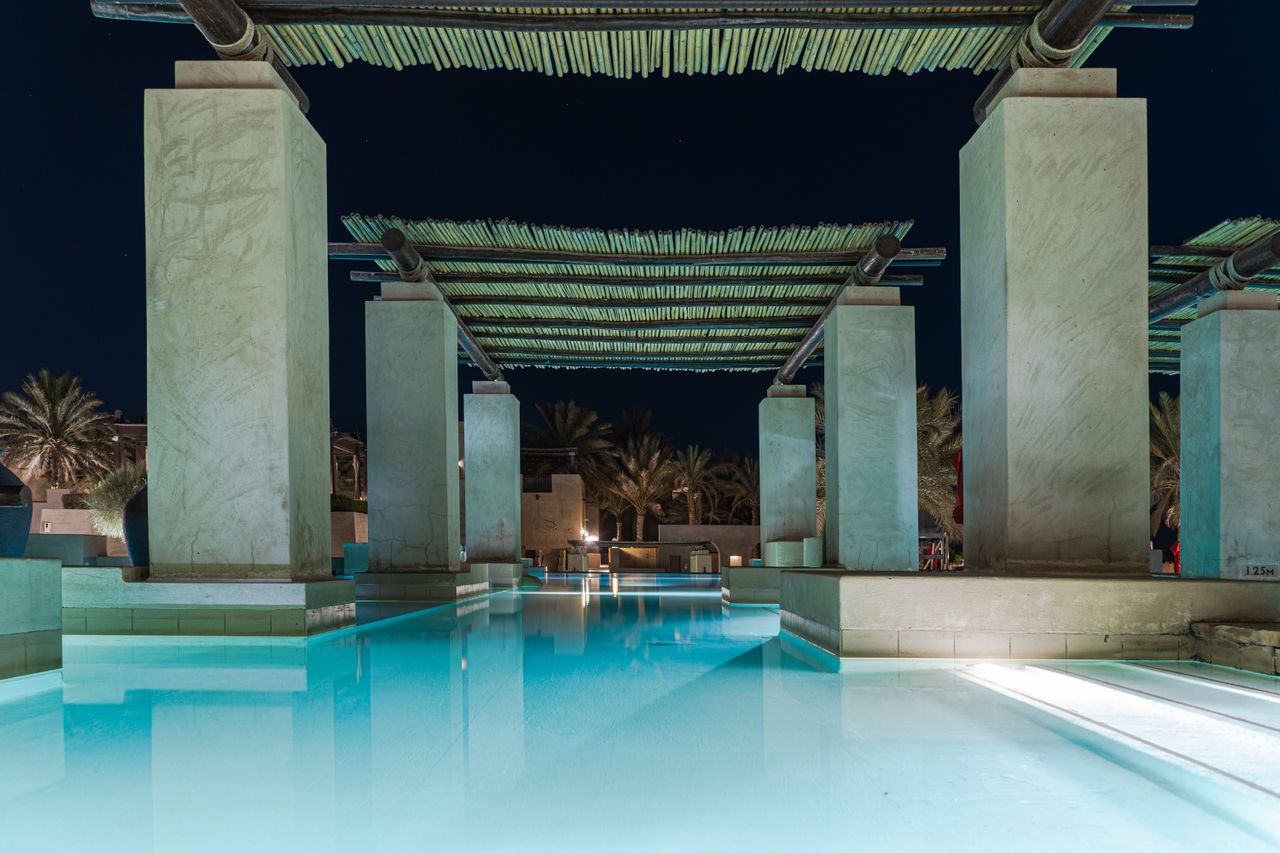
There's something about Dubai that refuses to stand still. The city never leans back on old wins, never settles into comfortable routines.
Instead, it constantly pushes forward, reshaping what luxury hospitality actually means for the modern traveler.
Over the past few years, this transformation hasn't just been about polishing surfaces or adding more gold leaf. It's become about rethinking the entire philosophy behind high-end stays. Visitors today are searching for something deeper than opulence. They want experiences that feel genuine, moments that matter, and spaces that respect both innovation and sustainability.
Where Real Estate and Hospitality Converge
Dubai's hospitality inventory reached 158,700 rooms across 770 establishments in early 2026, marking the emirate's strongest hotel sector performance to date.
What makes this significant isn't just the scale. It's how these properties have been carefully positioned across the city's most strategic districts, from the waterfront expanses of Palm Jumeirah to the soaring towers of Business Bay.
The residential side of the equation plays an equally vital role.
Binghatti has built a reputation for innovative design, timely delivery, and premium living spaces, with developments located across Dubai's most sought-after communities. These developments provide seamless connectivity, vibrant lifestyle amenities, and family-friendly environments.
For investors and end-users looking to explore some of the most renowned Dubai properties in the current market, the combination of modern architecture and smart layouts ensures unmatched value across residential and hospitality-linked assets alike.
Experience-Led Value Creation
Dubai's hospitality sector underwent a significant transformation in 2026, moving beyond traditional luxury amenities to incorporate longevity science and wellness technology into the core guest experience. Travelers increasingly seek destinations that provide tangible benefits beyond relaxation, whether learning new skills, supporting causes, or improving health.
The luxury category fueled recent inventory growth, with upscale brands introducing signature properties featuring oceanfront locations and iconic architecture while luxury hotel operators invested heavily in wellness centers, Michelin-starred restaurants, and personalized concierge services. These additions justify higher average daily rates and attract affluent travelers seeking distinctive experiences that go far beyond the standard five-star playbook.
The shift extends into how properties integrate themselves into their neighborhoods. Hotels aren't simply places to sleep anymore. They've become cultural anchors, dining destinations, and wellness hubs that draw both visitors and residents into shared spaces that pulse with energy throughout the day and night.
Understanding the full scope of how Dubai hotels are integrating cultural narratives into guest experiences offers a window into this evolution, where dining becomes theater and service becomes art.
Market Performance and Global Context
Dubai's hotel occupancy averaged 81 percent in 2025, rising 3.8 percent year on year, with upscale hotels recording the largest increase at 4.9 percent, followed by the luxury segment at 4.5 percent. These figures tell a story of sustained demand even during periods when global travel patterns faced uncertainty.
From a broader perspective, the global luxury hotel market was estimated at $103.93 billion in 2024 and is projected to reach $156.80 billion by 2030, growing at a 7.2% compound annual growth rate.
The Middle East and Asia-Pacific lead global luxury hospitality growth, outpacing mature Western markets through 2030, with the Middle East posting visitor counts 22% above 2019 levels, led by high-spending travelers.
What distinguishes Dubai within this wider ecosystem is its ability to absorb lessons from established luxury markets while maintaining its own distinctive identity.
In 2026, guests increasingly seek privacy, personalized experiences, wellness integration, and seamless mobility rather than visible extravagance alone, with elite travelers expecting curated experiences that blend comfort, discretion, and efficiency.
Policy and Infrastructure as Growth Enablers
Government strategy has played a decisive role in shaping the sector's trajectory. Tourism and hospitality continues to be a key driver for economic growth, contributing significantly to Dubai's gross domestic product and supporting the wider D33 ambition to double the size of the emirate's economy by 2033.
According to data published in the Financial Times Ltd's 'fDi Markets' tracking database, in the first half of 2025, hotels and tourism represented 21.3 percent of total estimated FDI capital flows into Dubai, demonstrating sustained investor confidence in long-term hospitality returns.
The infrastructure investments accompanying this growth have been equally strategic. Dubai recently approved one of its largest infrastructure-focused budgets, reinforcing long-term tourism ambitions through transport modernization and hospitality expansion initiatives that extend well beyond the current development cycle.
The Human Element Behind the Data
Numbers and projections tell part of the story, but the real transformation lies in how hospitality professionals across the city have adapted their craft to meet evolving expectations. Service teams have become adept at reading subtle cues, anticipating needs before they're voiced, and creating moments that feel both effortless and deeply considered.
Across the Middle East, luxury hospitality is undergoing a fundamental transformation that is redefining global benchmarks, with travelers increasingly seeking depth over display and meaning over material excess as hotels in the UAE reposition luxury as an experience that is curated, intentional, and emotionally resonant.
This philosophy extends into every touchpoint, from how concierge teams craft bespoke itineraries to how chefs source ingredients from local suppliers who share a commitment to excellence. The city's dining scene has become a destination in its own right, blending international techniques with regional flavors in ways that feel both adventurous and grounded in tradition.
Looking Forward
Dubai's luxury hospitality sector isn't showing signs of slowing down.
The emirate added 3,400 rooms during 2025, marking annual growth of 2.2 percent, while 10 new hotels opened, with a further 4,600 rooms scheduled for delivery in 2026.
But beyond the construction pipelines and occupancy metrics, what matters most is the underlying shift in mindset. Properties are no longer competing solely on thread count or marble bathrooms.
They're competing on the quality of the stories guests take home, the depth of connection they feel to place, and the sense that their time was spent somewhere that genuinely cared about creating something exceptional.
Dubai has always understood that luxury hospitality is ultimately about trust. It's about delivering on promises, exceeding expectations without fanfare, and creating environments where people feel valued rather than processed. As the city continues to evolve, that fundamental principle remains constant, even as everything around it transforms at remarkable speed.
The challenge moving forward won't be maintaining growth. It will be ensuring that growth never comes at the expense of the human connections that make hospitality meaningful in the first place.