

















There are products we eat almost every day without ever stopping to ask where they come from or how they are made. Tahini is definitely one of them. It sits quietly on Lebanese tables, hides inside our hummus, gives baba ghanouj its unmistakable creaminess, accompanies fish and falafel, enters sauces and desserts, and sometimes needs nothing more than a piece of bread and a little molasses to become something delicious. But what exactly is tahini, and how does a tiny sesame seed become that wonderfully rich, smooth and creamy paste we have known all our lives?
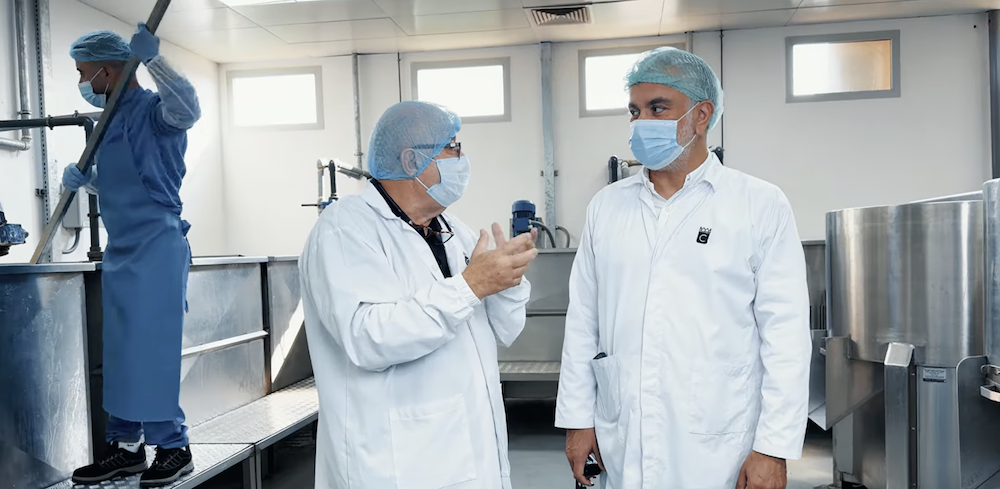
I went behind the scenes at C&Y Foods in Lebanon to find out, and what I discovered was much more than a factory production line. This is a story about Lebanese craftsmanship, generations of experience, traditional stone mills, modern technology and an impressive attention to food safety. Most importantly, it reminded me that some of the foods that appear to be the simplest actually require an incredible amount of knowledge and work.
The story behind C&Y Foods and Al Yaman stretches back generations, with roots dating to 1882. Today, that heritage continues with a new generation and a new line of products: Tahinati, Halawati, Rahati and Hilwayati. The names may be new, the packaging may be contemporary and the factory may have modernized, but much of the knowledge behind these products has been passed from one generation to another. C&Y Foods describes its philosophy with a simple phrase, “Quality is Art,” and walking through the factory, you begin to understand what they mean. Machines and technology are everywhere, but so are people whose experience remains an essential part of the process. Some of the craftsmen we meet have been doing this for more than 40 years. They look, smell, touch and taste the product, relying on instincts developed over decades of repetition and experience.
Our journey begins with something incredibly small: a sesame seed. And here is perhaps the most fascinating thing about real tahini: it only needs one ingredient — sesame. There is nowhere for poor quality to hide when your entire product depends on a single ingredient. For Tahinati, premium sesame is sourced from the fertile lands of Gadarif, Sudan, before beginning a long transformation inside the factory.
The sesame arriving at C&Y Foods is inspected and cleaned before being washed, hulled and separated. Watching thousands upon thousands of tiny sesame seeds flowing through an enormous production facility makes you appreciate a product that we normally encounter only when we open a jar. Each stage has a purpose, and each one affects what eventually reaches our table. The sesame has to be cleaned and prepared properly before moving toward one of the most important stages of the process: roasting.
Roasting develops the aroma and character of the sesame. Temperature and timing matter, but this is also where years of human experience become fascinating to watch. An experienced craftsman can examine the sesame, smell it and feel it and know whether it has reached the right point. Technology provides measurements and consistency, but there remains a level of knowledge that has been developed by people who have repeated the same craft thousands of times.
Then we reach one of the most impressive parts of the entire factory: the traditional stone mills. The prepared sesame is ground between enormous stones weighing approximately 1,200 kilograms each. Think about the contrast: tiny sesame seeds being transformed by stones weighing more than a ton. As the sesame passes through the mills, it gradually releases its own natural oils and changes consistency until it becomes the beautifully smooth, flowing paste we recognize as tahini. There is no secret ingredient responsible for that richness. It comes naturally from the sesame itself.
And this is where Tahinati starts becoming interesting beyond simply being another jar of tahini. For many people, tahini has become almost inseparable from one dish: hummus. Of course, good hummus needs good tahini, but tahini deserves a much bigger place in our kitchens. It can become a dressing, a sauce, a marinade or an ingredient in baking. It works with vegetables, meat and fish. It enters desserts, breakfast dishes and sandwiches. Mix it with molasses and you have one of the simplest pleasures of our childhood. We have been eating tahini for generations, but perhaps we have forgotten just how versatile it can be. Preserving tahini is important, but so is reinventing the way we use it.
Our factory journey continues from Tahinati to Halawati, where tahini becomes the foundation for another great product of our culinary heritage: halawa. Here we discover how tahini is combined with traditional natef to create the characteristic texture of halawa. What seems like a simple sweet when we buy it from the supermarket becomes much more interesting when you watch it being made. Temperature, proportions, mixing and timing all matter, and once again the experienced hands of the craftsmen play an important role.
From halawa we move to Rahati, inspired by the familiar raha many of us grew up eating, internationally known as Turkish delight. Soft, chewy and sweet, raha is one of those flavors capable of taking you directly back to childhood. We follow the production process and watch how it is prepared and finished before packaging. The journey then continues into Hilwayati and a world of chocolate-covered sweets and other creations that bring traditional ideas into more contemporary formats.
This is where the idea of “from generation to generation” begins to make even more sense. Heritage does not have to mean standing still. In fact, traditions survive precisely because people continue adapting them, improving them and finding ways to make them relevant to the next generation.
There is another part of this factory that consumers rarely think about when opening a jar of tahini: food safety. Sesame-based products require careful microbiological control, especially when they are being produced at scale and prepared for international markets. C&Y Foods incorporates pasteurization, sterilization, testing and quality-control procedures throughout production to minimize microbiological risks and maintain consistency. Containers are sterilized before filling and products move through controlled processes before being packed. It may not be as visually spectacular as watching sesame disappear between giant stone mills, but it is one of the most important parts of modern food production. The objective is to preserve the traditional character of the food while applying modern standards of hygiene, traceability, consistency and safety.
Tahinati eventually reaches consumers in several formats, from everyday 450g and 900g jars to larger 1.8kg, 3.6kg and 4.5kg family tubs for households that cook frequently, prepare moune or regularly welcome guests around generous Lebanese tables. Restaurants, caterers and professional kitchens can go even bigger with 9kg and 18kg formats. The quantities change, but the idea remains the same: good sesame transformed into good tahini.
After spending all this time learning about sesame and watching tahini being made, there was really only one possible way to finish the visit. We had to make hummus. We headed into the kitchen with chickpeas, Tahinati, fresh lemon and salt. Nothing complicated and nowhere for mediocre ingredients to hide. Tahini is not simply added to hummus for texture; it defines much of its character. Its nuttiness, richness and natural oils transform the chickpeas and give hummus that unmistakable flavor we associate with one of Lebanon’s most iconic mezze dishes. Mix everything together, spread it beautifully on a plate and taste. Sometimes the simplest test is the best one.
I have visited hundreds of producers, kitchens, farms and factories over the years, and experiences like this always remind me how little we see of the work behind the food we eat. We see a jar sitting on a supermarket shelf or a plate of hummus arriving at our table, but we don’t see the sesame farmer, the selection of the raw ingredients, the craftsmen roasting the seeds, the massive stones grinding them, the laboratories testing the product, the production teams packing it or the generations of accumulated knowledge behind everything.
That is ultimately what makes this visit to C&Y Foods interesting. It isn’t simply about watching tahini, halawa, raha and sweets being produced. It is about seeing what happens when products deeply connected to our culinary memory are prepared for another generation. Tradition meets technology, craftsmanship meets science, and heritage meets innovation.
And at the center of this enormous operation is something incredibly small: one sesame seed.
From sesame to tahini, from tahini to halawa, from an old Lebanese tradition to a modern factory preparing products for Lebanon and the world, this is a story that started generations ago and continues today.
This is how real Lebanese tahini is made. This is C&Y Foods. And this is another story proudly Made in Lebanon.
C&Y Foods
Instagram: https://www.instagram.com/cny.foods/
Website: https://cyfoods.shop
#NoGarlicNoOnions #AnthonyRahayel #CAndYFoods #Tahinati #Tahini #LebaneseTahini #LebaneseFood #MadeInLebanon #HowItsMade #FoodFactory #Hummus #Halawa #Sesame #Lebanon