

















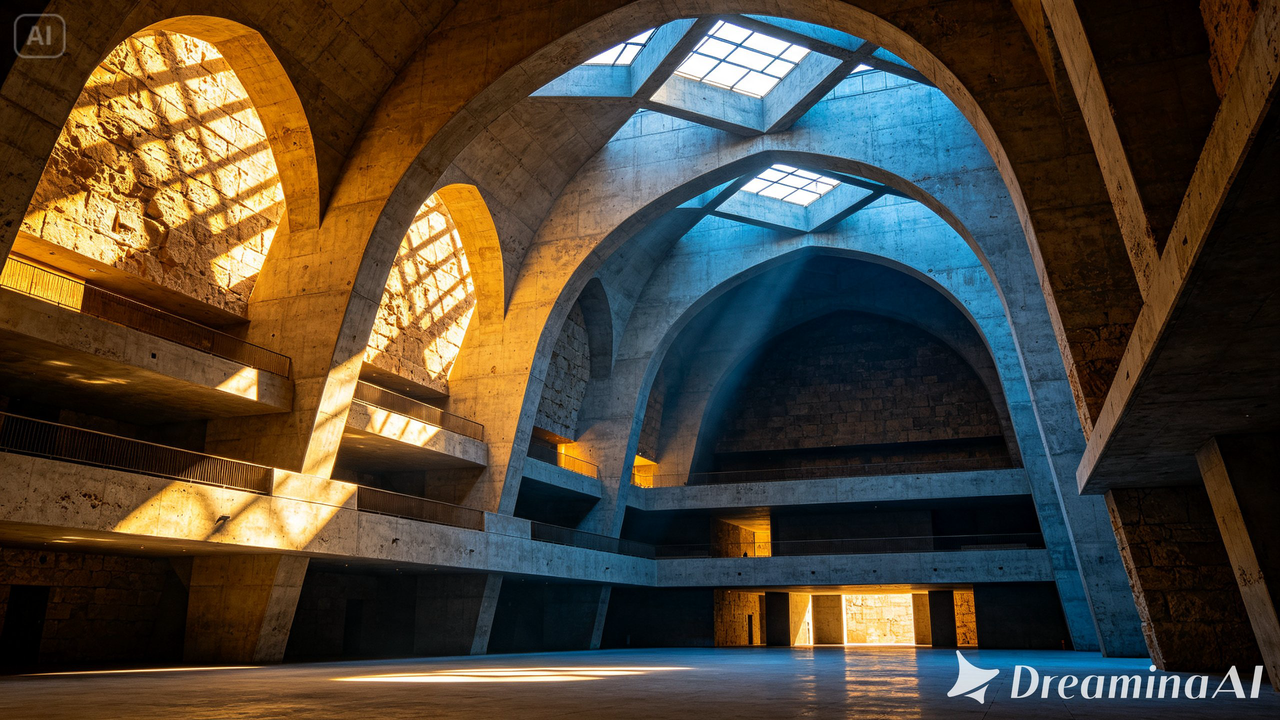
An architect sketches a building interior they've imagined — how light moves through the space, how a person would feel walking through it, the relationship between different zones. A writer describes a fantastical realm in prose that feels tangible and real to them, but communicating that spatial vision to someone else requires either elaborate explanation or visual reference. A game designer conceives of a level layout with specific mood and pacing but struggles to convey those spatial feelings to their team.
Advanced text to video generation now allows these spatial visions to move from imagination into generated footage that shows exactly what an environment looks and feels like.
Dreamina's Seedance 2.5 model was built specifically to render immersive environments from detailed descriptions, translating words about space into footage that captures the atmospheric and spatial qualities that make an environment genuinely compelling and livable.
Why environments matter more than we realize
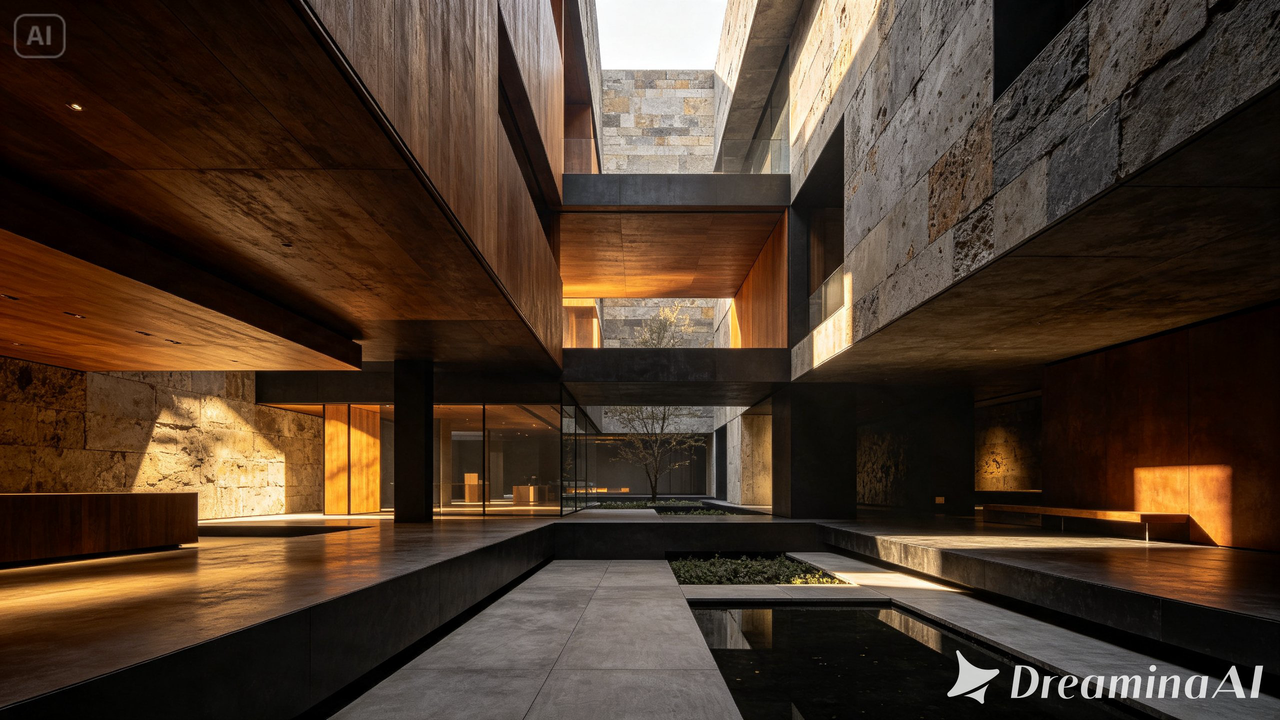
A character might drive a plot, but an environment drives how viewers feel about that plot. The same conversation between two people feels completely different in a sterile modern office versus a cluttered vintage apartment versus an outdoor marketplace. Environment isn't just backdrop — it's a participant in how a story unfolds and how viewers emotionally engage with what's happening.
This matters because it shifts how environments should be approached. Rather than treating space as decoration that happens after characters and action are established, environments become foundational. A character's internal state is often most readable through their relationship to their environment. A story's stakes are often communicated through spatial choices. Immersive environments don't just look impressive — they make everything else work better.
How immersion emerges from atmospheric precision
Immersion isn't about photorealism. It's about the viewer forgetting they're watching a screen and experiencing the space as though they're inhabiting it. That experience emerges when environment details accumulate consistently — lighting that behaves predictably within the world's logic, materials that look weathered appropriately, spatial relationships that remain coherent. A space with consistent internal logic feels immersive even if it's fantastical or impossible.
This consistency is actually easier to achieve through text-to-video than through traditional filmmaking, because a detailed prompt establishes all the rules at once. Rather than a cinematographer making lighting decisions scene by scene, a Seedance 2.5 generation can render an entire environment following the atmospheric logic established in the prompt. That unified approach creates environmental coherence that makes immersion possible.
Building spatial logic that viewers instinctively understand
Believable environments follow spatial rules. A room with windows receives light at particular angles. Staircases connect different elevations in coherent ways. Hallways lead to doors. That spatial logic doesn't need to be explicitly explained — viewers understand it instinctively from real-world experience. An environment that violates spatial logic without intentionality feels wrong, even if viewers can't articulate why.
.png)
What Makes Seedance 2.5 the Premier Environment Generator
Seedance 2.5 was engineered to render immersive environments with the spatial coherence and atmospheric sophistication that make generated spaces feel genuinely inhabitable and immersive.
Spatial coherence across complex layouts
The model understands how rooms connect to other spaces, how light propagates through multiple rooms, how scale relationships remain consistent across expansive environments. Rather than isolated room shots, Seedance 2.5 renders environments where spatial logic holds across the entire generated footage.
Atmospheric consistency that reinforces immersion
Layered depth and perspective
The model renders foreground, middle-ground, and background elements with appropriate scale and focus, creating true three-dimensional immersion rather than flat, stage-like spaces. This depth is what allows viewers to feel present within generated environments.
Extended duration for environmental exploration
Single-clip generation extends to 30 seconds, with Ultra-long Video Generation reaching 180 seconds, allowing complete spatial environments to be revealed progressively rather than compressed into single moments.
Material authenticity and textural detail
Surfaces render with realistic texture and aging patterns that communicate material properties and environmental history, making spaces feel genuinely lived-in rather than artificially constructed.
.png)
Building worlds through words and Seedance 2.5
This is where imagination meets generation — where your environmental vision becomes visible through text to video. Dreamina's interface makes this process straightforward, transforming written descriptions into immersive footage that captures exactly how your imagined spaces feel.
Step 1: Enter the prompt and upload reference images
Visit Dreamina, sign in, and head to the "AI Video" section. If you have architectural references, concept art, or mood board images that capture your environmental vision, click "Add reference image" to upload them. These images inform the generation's visual direction. Then write your environmental prompt describing the space's layout, scale, lighting, materials, atmosphere, and spatial relationships.
A detailed prompt for a 30-second generation might read: An abandoned library where nature reclaims interior space, vines growing through broken windows, daylight creating geometric patterns across shelves still lined with books, dust particles visible in light beams, scale impressive yet intimate, mood melancholic and beautiful, showing how human-made and natural spaces merge over time.
Step 2: Generate your immersive environment with Seedance 2.5
After entering your prompt, select the Seedance 2.5 model from the generation options. This ensures your environment renders with full atmospheric sophistication and spatial coherence. Choose your video length based on how much of the space you want to reveal — 30 seconds for focused environmental moments, longer for complete spatial exploration. Select an aspect ratio suited to your platform — 16:9 for cinematic environments or 9:16 for social platforms. Click Dreamina's generation icon and let the model render your described environment into immersive footage.
Step 3: Enhance and export your environmental creation
Polish your generated environment using Dreamina's AI editing tools. Upscale sharpens environmental detail and material texture, making surfaces and spatial relationships more visually compelling. Generate Soundtrack adds ambient audio that reinforces atmospheric mood — wind, echoes, environmental sounds that ground the space in sensory reality. Review your generated environment to ensure spatial coherence feels authentic and atmospheric mood matches your vision. Once the immersive quality feels genuinely inhabitable, export and share your environmental creation.
When words become worlds
The power of immersive environments lies in their ability to make viewers forget they're observing something artificial and instead feel present within a space.
With Dreamina and its Seedance 2.5 model, environmental visions that exist only as written descriptions can become generated footage that captures the spatial coherence, atmospheric richness, and emotional resonance.
It makes an environment genuinely immersive, allowing architects, designers, writers, and creators to share their spatial imagination with others in forms that feel tangibly real.
Tags:
News
Categories:
News