















ZAATAR: The Story, Science & Secrets of Lebanon’s Most Iconic Herb
Zaatar is much more than something we sprinkle on a manousheh. It is part of Lebanon’s land, history, traditions, agriculture and identity.
In this in-depth conversation with Dr. Marc Beyrouthy, we explore zaatar from every angle — from the wild plant growing in the Lebanese mountains to the zaatar mixture on our breakfast tables.
We discover Origanum syriacum, the plant most closely associated with traditional Lebanese zaatar, and explore the many other plants Lebanese people call “zaatar.” Marc explains why the same plant can taste completely different depending on the village, altitude, soil, rainfall, season, harvesting method and even the way it is dried.
We also dive into the fascinating historical connection between zaatar and the biblical “hyssop,” the origins of its scientific name, and the research Marc and his teams have conducted on Lebanese zaatar, its essential oils and its chemical composition.
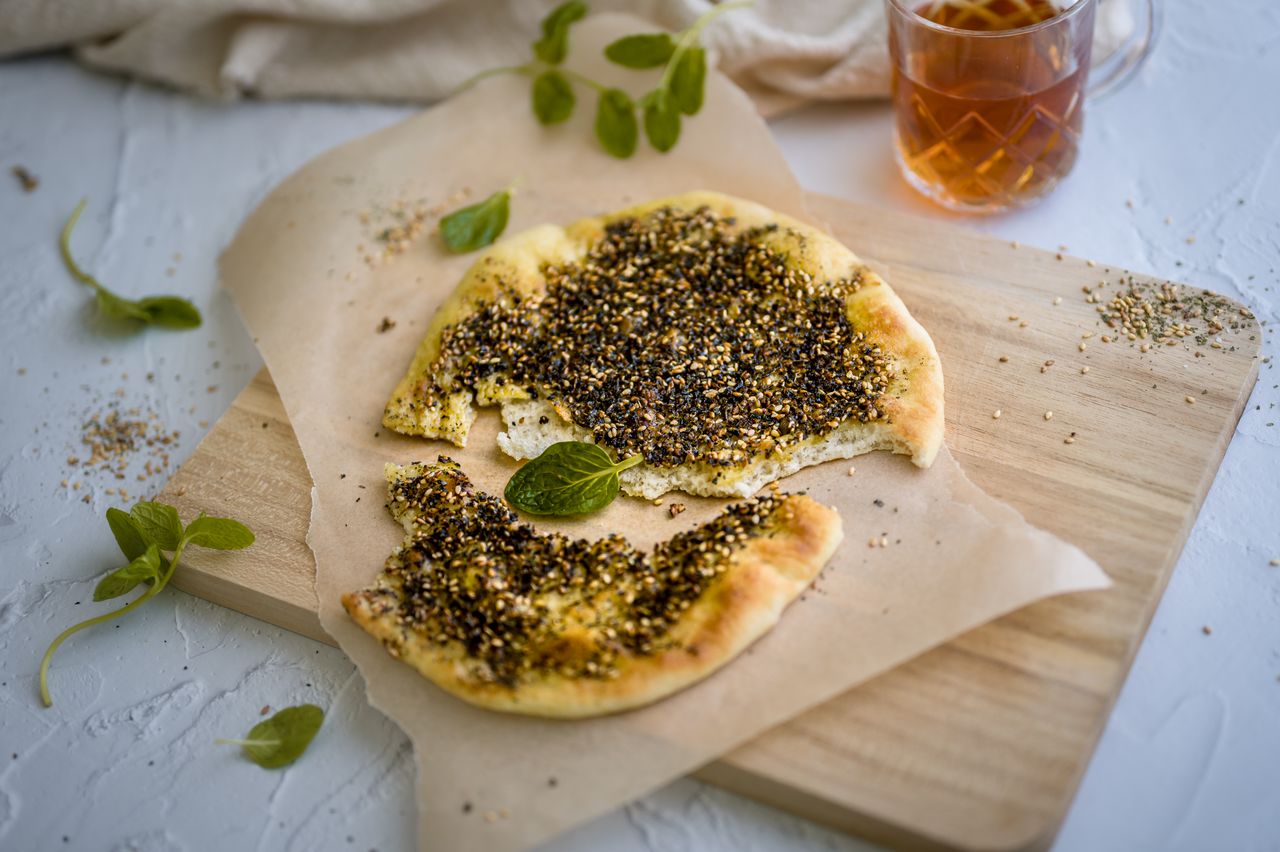
And of course, we couldn’t talk about zaatar without talking about the manousheh!
We discuss what makes a great zaatar manousheh: the dough, fermentation, hand stretching versus machines, zaatar mixtures, sumac, sesame, olive oil, oven temperature and cooking technique. We compare the traditional furn, saj and tannour, and discuss why preserving Lebanon’s small village bakeries matters.
We also explore:
- Lebanese vs Jordanian vs Aleppine zaatar mixtures
- Wild zaatar versus cultivated zaatar
- The right way to harvest wild herbs without destroying nature
- When zaatar should be harvested
- Why drying is one of the most critical stages
- Zaatar essential oils and distillation
- Zaatar honey and other innovative products
- How zaatar can be grown alongside olive and fruit trees
- The economics of growing zaatar in Lebanon
- Packaging, branding and exporting Lebanese zaatar
- Why cooperatives could help Lebanese farmers reach international markets
- How Lebanon can transform zaatar from a simple agricultural product into a premium product with identity, terroir and a story
Perhaps the biggest idea from this conversation is that we should stop looking at “Lebanese zaatar” as one single product.
Just like wine, olive oil, apples or coffee, zaatar has a terroir. A zaatar grown at 1,200 meters in one Lebanese village can be completely different from the same species grown near the coast.
Which village? Which altitude? Which soil? When was it harvested? How was it dried? What was added to the mixture?
These details could become part of the future of Lebanese zaatar.
From the mountain to the manousheh, this is more than one hour dedicated to understanding, protecting and celebrating one of Lebanon’s most extraordinary ingredients.
Zaatar is not simply food. It is agriculture, heritage, science, memory and Lebanese identity.
Watch until the end, and tell us in the comments: Where have you eaten the best zaatar manousheh in Lebanon?