

















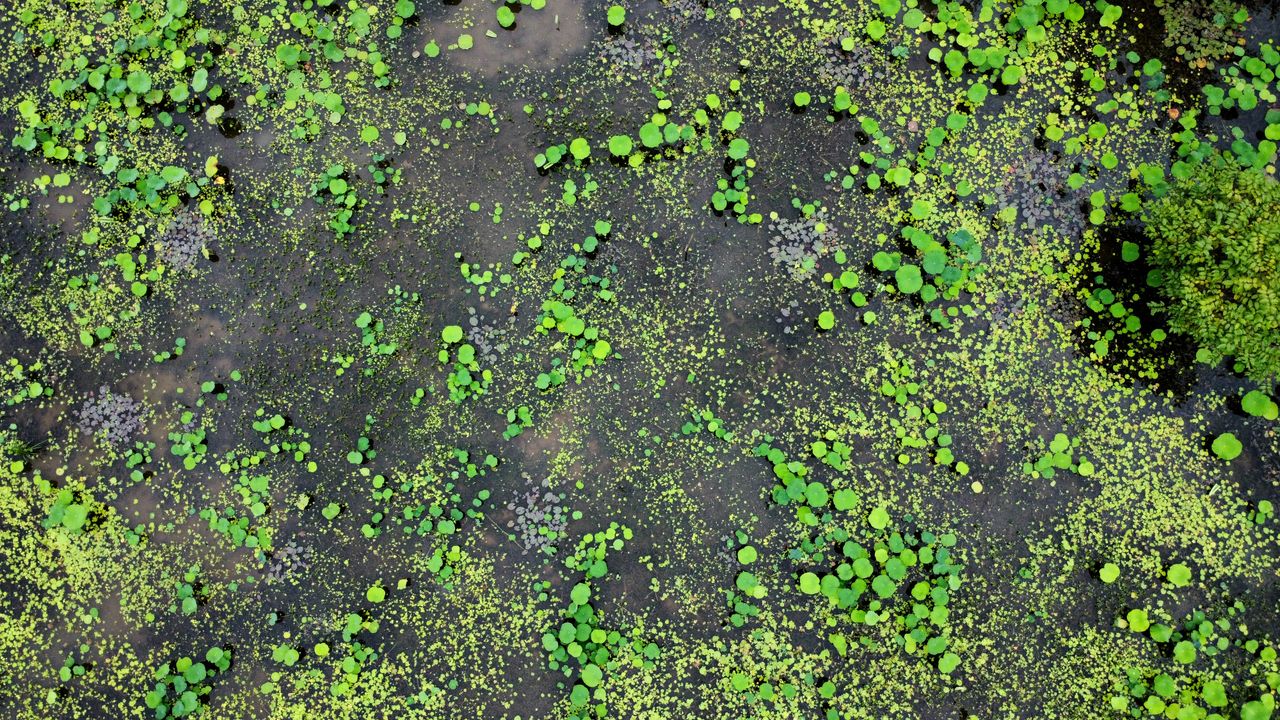
Every few years, a new ingredient shows up on menus and in wellness circles, claiming to be the next big thing in nutrition. Kale had its moment. So did quinoa, chia seeds, and spirulina. Now there's a new contender making its way from research labs and specialty health stores into home kitchens, and it might be the smallest superfood you'll ever eat: Wolffia globosa, more commonly known as duckweed or "water lentil."
If you've never heard of it, you're not alone. Wolffia is one of the smallest flowering plants on Earth, so tiny that a single plant can fit on the head of a pin. It floats on the surface of freshwater ponds and lakes across Asia, where it has quietly been part of traditional diets in Thailand, Laos, and Myanmar for generations. What's changed recently is that nutritionists, food scientists, and sustainability advocates have all started paying closer attention to what this unassuming little plant can actually do.
Why This Tiny Plant Is Getting So Much Attention
The appeal of Wolffia comes down to a combination of nutrition, sustainability, and versatility that's genuinely rare in the plant world. Gram for gram, it delivers a surprising amount of complete protein, meaning it contains all nine essential amino acids the body can't produce on its own. That alone puts it in a different category from most plant foods, which typically fall short on one or two essential aminos.
Beyond protein, Wolffia is rich in iron, vitamin B12 (a nutrient notoriously hard to find in plant sources), polyphenols, and chlorophyll. It has a mild, slightly green, almost pea-like flavor that blends easily into smoothies, soups, and sauces without overpowering other ingredients. Chefs experimenting with it have compared its culinary flexibility to spinach or matcha, in that it can be worked into both savory and lightly sweet dishes.
Then there's the sustainability angle, which is arguably where Wolffia really separates itself from the pack. It grows incredibly fast, doubling its biomass in as little as a day or two under the right conditions. It needs far less land and water than traditional protein crops, and it doesn't require the kind of intensive farming inputs that soy, almonds, or livestock production typically demand. For a world thinking hard about how to feed a growing population without wrecking the planet in the process, a plant that grows this efficiently and packs this much nutrition is hard to ignore.
The Practical Side: Sourcing and Quality
One of the challenges with any emerging superfood is knowing where to actually get it, and how to tell a quality product from something diluted or poorly processed. Because Wolffia is still relatively new to Western markets, sourcing matters more than it might for an established ingredient like flaxseed or oats. Growing conditions, harvesting methods, and processing all affect the final nutrient profile, so it's worth looking for suppliers who are transparent about how their product is cultivated and prepared.
For people who want to try it without hunting through scattered suppliers or uncertain quality, the Wolfa store has built its offering specifically around Wolffia globosa, with products designed to make it easy to add into a normal diet. Whether you're curious about it as a protein source, a way to boost B12 intake on a plant-based diet, or simply an interesting addition to your smoothie rotation, having a dedicated source takes a lot of the guesswork out of trying something new.
How People Are Actually Eating It
Because Wolffia has such a mild taste, most people aren't eating it on its own. It usually shows up as a powder or a frozen concentrate that gets folded into other dishes. A spoonful in a morning smoothie adds a boost of plant protein and micronutrients without changing the flavor much. Stirred into a soup or pesto, it adds a subtle earthiness and a deep green color. Some home cooks have even started using it in energy balls, pancake batter, and homemade pasta dough as a way to sneak in extra nutrients.
This is part of why interest in Wolffia has grown alongside the broader wave of superfood curiosity that's been building for over a decade. Anyone who has spent time reading up on nutrient-dense ingredients, including guides like nutrient-dense food guides, will recognize the pattern: a food gets identified by researchers for its nutritional density, word spreads through health and wellness communities, and eventually it lands on supermarket shelves and restaurant menus. Wolffia appears to be somewhere in the middle of that journey right now, well known among nutrition researchers and early adopters, but still unfamiliar to most everyday shoppers.
A Closer Look at the Nutrition Numbers
It's worth slowing down on the nutrition profile for a moment, because the numbers are what make Wolffia stand out from most plant foods rather than just another wellness trend. Depending on growing conditions, dried Wolffia can contain somewhere in the range of 35 to 45 percent protein by weight, which puts it closer to legumes like lentils and soybeans than to leafy greens like spinach or kale, even though it looks and behaves more like a leafy green in the kitchen.
The amino acid profile is where things get particularly interesting. Many plant proteins are limited in one or two essential amino acids, most commonly lysine or methionine, which is why plant-based diets often rely on combining different protein sources across a day to get a complete profile. Wolffia doesn't have that limitation. It naturally contains all nine essential amino acids in meaningful amounts, which is unusual for a plant and part of why researchers have taken such an interest in it as a potential food security solution.
Then there's the micronutrient side. Wolffia is a notable source of iron and folate, and some cultivated varieties have tested positive for naturally occurring vitamin B12, a nutrient almost entirely absent from plant foods and one of the more persistent challenges for people avoiding animal products. It also contains a reasonable amount of omega-3 fatty acids relative to its size, along with polyphenols and chlorophyll that contribute to its antioxidant properties. None of this means Wolffia is a cure-all, but it does mean the nutritional case for it is built on more than marketing language.
A Plant With a Long History Before It Was Trendy
Part of what makes Wolffia's rise interesting is that it isn't actually new. Long before nutrition researchers started measuring its protein content, communities across Thailand, Laos, and Myanmar were harvesting duckweed from ponds and rice paddies and cooking it into soups, stir-fries, and omelets. In parts of Southeast Asia it's known by names like "khai nam," which loosely translates to "eggs of the water," a nod to its slightly savory taste and the way it was traditionally used as an affordable, accessible source of nutrition for rural households.
That history matters because it means Wolffia isn't an untested lab creation dressed up as a superfood. It's a food with generations of real-world use behind it, harvested from natural water sources and prepared using simple, traditional methods. What's changed is the scale and the audience, as western researchers, food technologists, and now home cooks outside Southeast Asia start to recognize what those communities already knew.
Should You Actually Add It to Your Diet?
As with any ingredient marketed under the "superfood" label, a little skepticism is healthy. No single food is a magic bullet for health, and Wolffia is not going to replace a balanced diet built on vegetables, whole grains, healthy fats, and varied protein sources. But as a supplement to an already reasonable diet, it does offer something genuinely useful: a concentrated, easily absorbed source of nutrients that are often difficult to get enough of, especially for people eating primarily plant-based.
For vegans and vegetarians in particular, the combination of complete protein and naturally occurring B12 is unusual enough to be worth paying attention to. Most plant foods require some kind of fortification or supplementation to hit those marks, so a whole food that arrives with them built in stands out.
There's also something appealing about the story behind Wolffia that goes beyond nutrition numbers. In a food landscape increasingly focused on where things come from and how they're grown, a plant that's been quietly sustaining communities in Southeast Asia for centuries, while also representing one of the more land-efficient and water-efficient crops available, checks a lot of boxes at once. It's not hype dressed up as substance. It's a genuinely interesting piece of the puzzle for anyone thinking seriously about nutrition and sustainability together.
Final Thoughts
Food trends come and go, and it's easy to be cynical about the next ingredient promising to change how we eat. But Wolffia globosa has a few things going for it that separate it from a passing fad: a long history of traditional use, a nutrient profile that fills real gaps in plant-based eating, and a growth efficiency that makes sense in a world increasingly concerned with sustainable food production.
If you're the type of person who likes to stay a step ahead on nutrition trends, or if you're simply looking for a new way to round out a plant-based diet, this might be the moment to give Wolffia a try. It's not going to dominate dinner conversation the way avocado toast once did, but for anyone paying attention to what's actually in their food and where it comes from, this tiny green plant is worth getting to know.