







There are trips where you visit a country, see its monuments, eat at a few restaurants and return home with photographs. And then there are journeys where you slowly begin to understand a place. Cyprus was one of those journeys.
Villages / towns visited, in the order they appear in the journey
- Larnaca – arrival / beginning of the journey
- Pervolia – coastal village area south of Larnaca
- Kiti – traditional village/church stop
- Lefkara (Pano Lefkara) – one of the major village stops; stone streets, traditional architecture and food
- Kato Drys – traditional mountain village close to Lefkara
- Vavla – small preserved rural village
- Choirokoitia / Khirokitia – village and archaeological area
- Kalavasos – traditional village and surrounding countryside
- Tochni – historic stone village
- Pissouri – village/coastal area
- Omodos – one of the most important stops of the trip; monastery, old streets, food and traditional products
- Koilani – wine-region mountain village
- Lofou – beautifully preserved stone village
- Platres – Troodos mountain resort village
- Troodos – high-mountain area and settlements around Mount Olympus
- Kakopetria – historic mountain village
- Galata – traditional village close to Kakopetria
- Kalopanayiotis – mountain village in the Marathasa Valley
- Pedoulas – Troodos mountain village
- Agros – mountain village known particularly for roses and traditional products
- Nicosia / Lefkosia – city rather than village, but part of the route
- Famagusta area – another urban/historic destination rather than a village
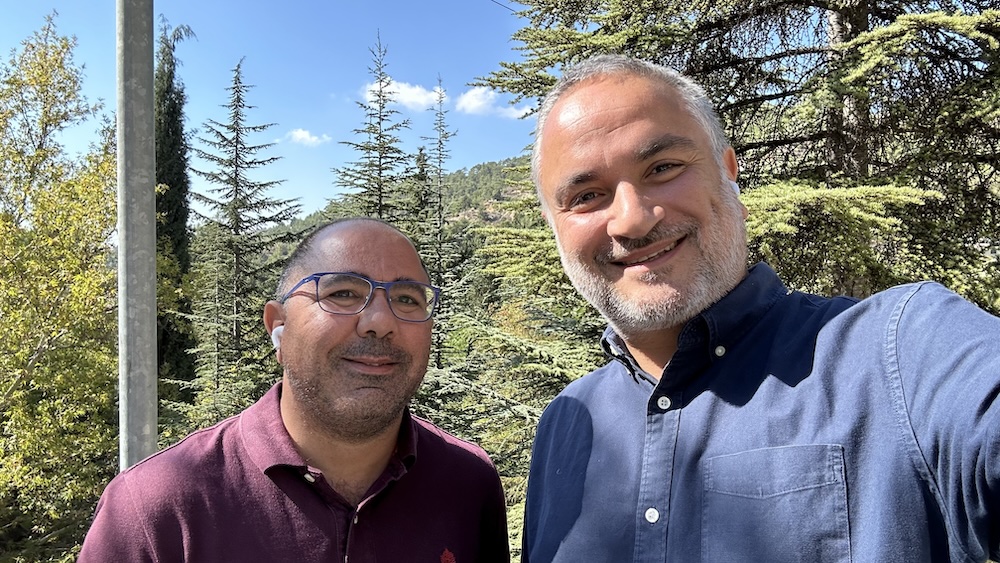
For Mission Nature, traveling has never been simply about reaching famous landmarks. With Dr. Marc Beyrouthy, the idea is always to look deeper. To stop for a plant growing beside the road, enter a village that wasn’t necessarily on the itinerary, speak with the woman preparing food in her kitchen, understand why a tree grows in one place and not another, walk through an archaeological site and connect what happened thousands of years ago with the way people still live today. Cyprus gave us all of that.
Across several days of filming and almost nine hours of adventures, we crossed the island from the Mediterranean coast to traditional villages, archaeological sites, agricultural plains, forests and the highest mountains. We tasted, walked, talked, learned and repeatedly found ourselves saying the same thing: Cyprus feels surprisingly familiar.
For someone coming from Lebanon, that familiarity appears everywhere. In the sea, the mountains, the olive trees, the citrus orchards, the stone villages, the churches, the bread, the halloumi, the grilled meats, the sweets and the hospitality. Even the way people insist that you sit down and eat before continuing your journey feels familiar. Cyprus and Lebanon are different, of course, but there is something unmistakably eastern Mediterranean connecting the two.
Our journey began around Larnaca, where the Mediterranean immediately sets the tone. But Mission Nature never stays in the city for long. We quickly found ourselves moving through the countryside and coastal villages around Pervolia and Kiti, beginning to discover another Cyprus beyond the resorts. Fields, gardens, old churches and traditional houses appeared around us, and daily life seemed to move at a very different rhythm from the tourist areas.
This is where Marc’s Mission Nature instinct takes over. A drive that should take twenty minutes can easily take two hours. You see something growing beside the road and stop. Someone is working in a field and you stop. There is an old bakery, so you stop. A church door is open, so you stop. Someone tells us that a woman nearby still prepares something using the old method, and suddenly the entire program changes.
That spontaneity would become one of the defining characteristics of our journey.
Eventually the road carried us into the hills and toward Pano Lefkara, one of Cyprus’s most famous traditional villages. Lefkara is the kind of place that demands to be discovered slowly. Stone houses line narrow streets. Wooden doors, balconies, workshops and small shops appear around every corner. The village is known for lace and silverwork, but what interested us was not simply the finished object displayed to tourists. We wanted to understand the hands behind it.
A souvenir becomes meaningful when you meet the person making it. A recipe becomes important when someone explains who taught it to them. A village becomes alive when you stop looking only at its buildings and start meeting its people.
Around Lefkara and the surrounding villages, including Kato Drys and Vavla, we discovered that Cyprus’s villages are not museum pieces. People still cook, cultivate, preserve, bake and produce. Knowledge is still being passed from one generation to another. And naturally, there was food everywhere.
Bread, sesame, cheese, meats, sweets and local products constantly reminded us of home. Sometimes the names were different. Sometimes the technique changed slightly. But the Mediterranean DNA was unmistakable.
Cyprus cannot be understood only through its villages. You have to go much further back. At Choirokoitia, the landscape suddenly transports you thousands of years into the past. Archaeology becomes essential to understanding how long people have been living, farming, building and organizing communities on this island.
Throughout the trip, we encountered civilizations layered one above another. Ancient settlements, Roman remains, Byzantine churches, medieval structures, monasteries, tombs and old roads appeared almost everywhere. At certain moments, it felt as though every few minutes there was another reason to say “wow.” You walk a few metres and discover something else. Then something else. Then another layer of history.
That feeling stayed with us throughout Cyprus. History here is not locked inside one museum. It is scattered across the entire island.
Continuing through places such as Kalavasos and Tochni, we entered another world of stone houses and quiet village streets. These are the places I love filming. Not necessarily because there is one spectacular monument waiting at the end, but because the village itself is the attraction. A doorway, an elderly man sitting outside, a tiny coffee shop, an old church, a woman preparing something at home, flowers spilling over a stone wall. The small details become the story.
We discovered old buildings that had been restored and others that still carried every mark of their age. We saw how architecture adapted to climate, terrain and available materials long before anyone used words like sustainable design. Stone, wood, earth and shade. Simple materials intelligently used for generations.
Of course, this is NoGarlicNoOnions, so we ate. A lot. But Mission Nature changes the way we look at food. A plate is no longer simply about whether it tastes good. Where did the ingredient come from? Why does it grow here? When is its season? Who planted it? How was it preserved before refrigeration? Why does one village prepare it differently from another?
That is where Marc and I complement each other perfectly. I want to taste it. Marc wants to identify it. I want another bite. Marc wants to explain the plant’s scientific name, origin, ecosystem and traditional use. Somewhere between the two approaches, the complete story appears.
Halloumi naturally became one of those stories. Cyprus and halloumi are inseparable, but tasting it where it belongs changes your understanding of the product. Fresh, grilled, cooked and incorporated into traditional recipes, it becomes something much larger than the packaged cheese most people know from supermarkets.
The same happened with bread, meat, sesame preparations, fruits, vegetables, preserves and sweets. Again and again, Lebanon appeared in the conversation. “This looks Lebanese.” “We have something similar.” “We call it something else.” “The preparation is almost identical.” And yet Cyprus always added its own identity. That is the beauty of Mediterranean cuisine. Countries share ingredients without losing their individuality.
The journey eventually climbed toward some of Cyprus’s most beautiful wine villages. Pissouri opened another chapter before we continued deeper inland toward Omodos.
Omodos is exactly the type of place where you can arrive planning to spend one hour and discover three hours later that you still haven’t left. Stone streets lead toward the historic monastery. Small shops sell local products. Traditional bakeries and cafés appear between restored houses. Wine culture is everywhere. The village invites you to walk, and walking is important because you notice much more when you leave the car behind. The texture of the buildings, the smells escaping from kitchens, the sound of people talking inside cafés, old signs, plants growing from cracks in walls. These are the details that disappear when tourism becomes a checklist.
From Omodos, our exploration continued through wine country and villages such as Koilani and Lofou. Lofou in particular is one of those villages that immediately catches the eye. Stone architecture, narrow lanes and beautifully preserved traditional houses make it feel almost cinematic. But again, our interest went beyond appearance. What did people grow here? How did they survive in these mountains? What did they eat? Where did their water come from? How were houses built?
Every beautiful village has an underlying system that allowed generations to live there. Mission Nature tries to find that system.
One of the strongest impressions from the journey was the abundance of agriculture. At different moments, we found ourselves surrounded by citrus, olives, grapes, pomegranates and vegetables. We stopped in villages where particular fruits were part of the local identity. We walked through gardens where the colors almost seemed exaggerated. We tasted produce directly from the source.
Pomegranates became an entire conversation of their own: their origins, symbolism, varieties and cultural importance. Mandarins and citrus appeared repeatedly. Grapes naturally connected the landscape with Cyprus’s ancient wine traditions. Olive trees reminded us that some Mediterranean stories transcend borders entirely.
This is exactly why understanding biodiversity matters. The supermarket gives us the illusion that every fruit exists twelve months a year. Nature tells a completely different story. There is a season. There is a place. There is a climate. There is soil. There is knowledge. And behind every traditional product is usually a relationship between all five.
Then Cyprus changed completely.
We started climbing.
The Mediterranean landscape gradually gave way to forests and cooler temperatures as we approached Platres and the Troodos Mountains. This was another Cyprus entirely. Dense forests replaced the dry coastal scenery. Mountain roads twisted through landscapes that can make you forget you are on a Mediterranean island.
For Marc, this was paradise.
Plants everywhere. Endemic species, trees, flowers, shrubs and herbs. Entire ecosystems changed as the altitude increased. We walked through forest areas where plants were identified along the trail, turning the landscape into an open-air botanical classroom.
At around 1,700 metres, the environment had already changed dramatically. Then we climbed higher. 1,800 metres. 1,900 metres. Finally, close to Mount Olympus, we reached roughly 1,950 metres, near the highest accessible areas of Cyprus.
Suddenly we were above the clouds.
Looking across the forest from that altitude was one of the unforgettable moments of the trip. Trees stretched across the mountains in every direction. The air was completely different. The temperature had dropped. Ski facilities reminded us that in winter this Mediterranean island can become covered in snow.
Beach in the morning. Mountains in the afternoon. That is Cyprus.
Descending through Troodos brought us into another series of extraordinary communities. Kakopetria is among the most beautiful. Old stone houses, wooden balconies, narrow streets and flowing water give the historic quarter a personality completely different from the coastal villages. Nearby Galata continued the story of Cyprus’s mountain settlements and religious heritage.
Churches became particularly important here. Some are modest from the outside. You open the door and everything changes. Icons, frescoes, woodwork and centuries of religious art appear inside tiny buildings.
At one stop, we entered a church that left us almost speechless. From outside, there was little indication of what waited inside. Moments like this are why rigid itineraries don’t always work. Sometimes the greatest discovery of the day is the place you weren’t planning to visit.
Our road continued into the Marathasa Valley toward Kalopanayiotis and Pedoulas. Here again, geography explains everything. Villages cling to mountainsides. Water shapes the valleys. Agriculture adapts to elevation. Churches and monasteries reveal how important these mountains became as places of refuge, spirituality and community.
You begin to understand why mountain cultures throughout the Mediterranean often preserve traditions longer than cities. Isolation once made life difficult, but that same isolation protected knowledge. Recipes survived. Architectural styles survived. Agricultural techniques survived. Local varieties survived. Religious traditions survived.
Today, these are exactly the things travelers come looking for.
In Agros, another side of Cyprus appeared. The village is strongly associated with roses and traditional products, demonstrating again how one plant can become part of a community’s identity and economy. This is something we have encountered repeatedly during Mission Nature journeys. Nature becomes culture. Culture becomes food. Food becomes economy. Economy helps preserve the village.
When that cycle works, tradition remains alive rather than becoming something displayed behind glass.
Not everything went according to plan.
Thankfully.
Some of the best moments happened because Google Maps sent us somewhere unexpected or because we saw something interesting and changed direction. At one point, we ended up in a tiny village almost by accident. At another, we discovered a house or church simply because something about it caught our attention from the road.
There were restaurants we found without planning. People opened places that were already closing. Families welcomed us. Someone always seemed ready to explain, cook, offer something or point us toward the next discovery.
That generosity became one of my strongest memories of Cyprus.
The itinerary might say one thing. The road says another. On Mission Nature, the road usually wins.
Eventually the villages and countryside led us toward Nicosia, or Lefkosia, one of the world’s most unusual capitals. Cyprus’s modern history becomes impossible to ignore here. The island carries ancient history, but it also carries very recent wounds.
Walking through Nicosia reveals layers of architecture, communities and political history that make the city fundamentally different from the resort image many visitors associate with Cyprus. This is another important part of travel. You cannot celebrate only the beautiful parts of a country. To understand a place, you also need to understand what shaped its people.
Our exploration also brought us toward the Famagusta region, adding yet another chapter of archaeology, Christianity, medieval history and modern Cyprus.
By this stage of the trip, something had become very clear.
Cyprus is much bigger than its physical size suggests. Not geographically. Experientially.
The island is compact enough that you can cross major landscapes in a relatively short time, yet every region seems capable of becoming an entire journey on its own.
Nine hours of video cannot be carried by landscapes alone. What makes this journey special are the encounters. Farmers, bakers, restaurant owners, craftspeople, women cooking, people cultivating gardens, priests opening churches, villagers explaining traditions and producers proudly sharing what they make.
Sometimes communication was easy. Sometimes we understood half of what was being said. Sometimes food did the translating.
But hospitality requires very little translation.
You recognize it immediately. A chair appears. Then coffee. Then food. Then another plate. Then something sweet. Then you realize the quick five-minute stop has lasted an hour.
Lebanese people know this sequence very well.
Perhaps that is another reason Cyprus felt so familiar.
Throughout the journey, we kept returning to Lebanon. Not because Cyprus needs to be compared with another country, but because the similarities were impossible to ignore. Mountains falling toward the Mediterranean. Stone villages. Olive trees. Grapes. Carob. Citrus. Pomegranates. Sesame. Grilled meats. Fresh cheeses. Bread. Monasteries. Village churches. Family agriculture. Hospitality. Ancient civilizations layered beneath modern life.
Even the distances feel familiar. In a relatively small territory, altitude, climate, vegetation and culture can change dramatically.
And yet the differences are equally fascinating. Different plants. Different preparations. Different architecture. Different historical influences. Different ways of preserving similar ingredients.
That combination of familiarity and discovery made Cyprus particularly exciting. It felt close to home without ever feeling like home.
After almost nine hours of filming, hundreds of kilometres on the road and more food than I should probably admit to eating, the strongest memory isn’t one restaurant or one archaeological site.
It is the connections.
A plant connects to a recipe. A recipe connects to a village. A village connects to geography. Geography connects to history. History connects to architecture. Architecture connects to climate. Climate connects back to the plants.
Everything is related.
That is Mission Nature.
Marc can look at a flower beside the road and open an entire chapter of history, botany and culture. I can look at the same plant and ask the question that matters most to me: “Can we eat it?”
Somewhere between those two questions lies the spirit of this adventure.
From Larnaca, Pervolia and Kiti to Pano Lefkara, Kato Drys and Vavla; from Choirokoitia, Kalavasos and Tochni to Pissouri, Omodos, Koilani and Lofou; from Platres and the Troodos Mountains to Kakopetria, Galata, Kalopanayiotis, Pedoulas and Agros, and onward toward Nicosia and Famagusta, Cyprus revealed itself gradually.
Not through one attraction, but through hundreds of small moments.
An old woman working with her hands. Bread coming out warm. A piece of halloumi on the grill. A forgotten church. A pomegranate opened in a field. An ancient stone beneath our feet. A forest at 1,900 metres. A coffee in a mountain village. A conversation with someone we had never met before. A road we weren’t supposed to take.
These are the moments that stay with you.
If you know Cyprus only through its beaches and resorts, you know one beautiful part of the island.
But drive inland. Leave the highway. Climb into the mountains. Walk through the villages. Open the church doors. Speak with people. Taste what they produce. Ask where the food comes from. Stop when something catches your eye.
Cyprus has thousands of years of stories waiting between the Mediterranean Sea and the top of Mount Olympus.
And after almost nine hours of Mission Nature, I still felt we had only scratched the surface.
Mission Nature Cyprus wasn’t simply a trip around an island. It was a journey through nature, food, archaeology, agriculture, religion, villages and people, and another reminder that the best way to understand a country is to slow down, get off the main road and let the people and the land tell you their story.