














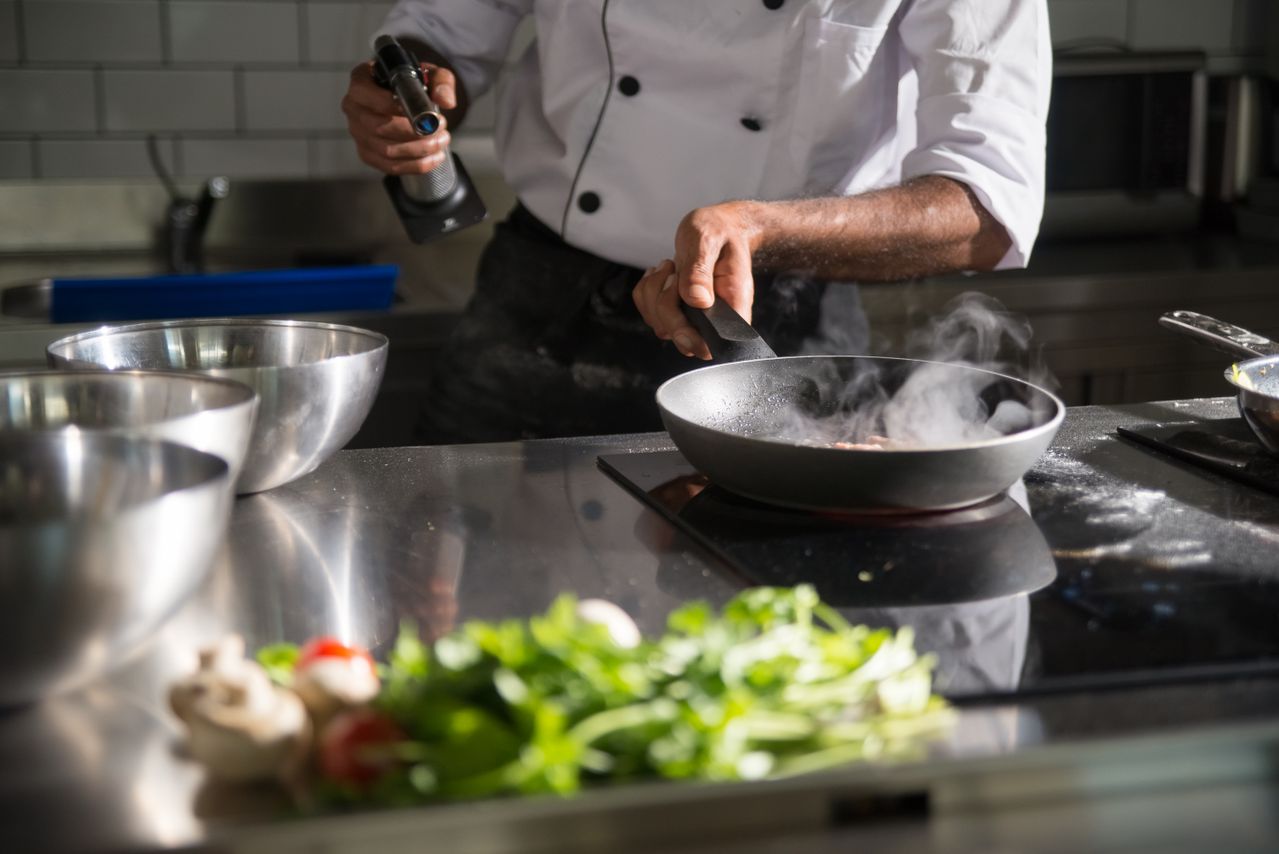
Cooking at home gives you room to improvise. You can taste as you go, turn the heat down, add a little more seasoning, or take an extra ten minutes if dinner needs it. A professional kitchen works differently. Food has to come out on time, dishes have to stay consistent, and every person on the team has a part to play. Once cooking becomes a job, you start thinking differently about timing, hygiene, teamwork, storage, and the way each task connects to the next.
Consistency Starts to Matter More Than Instinct
At home, a dish can turn out a little different every time and still be great. In a restaurant, people expect the meal they loved last week to taste just as good when they order it again.
That calls for more than instinct. Portions, cooking times, seasoning, prep, and plating all need a certain level of consistency. Another cook should be able to step in and produce a similar result. There is still plenty of room for creativity, but a professional kitchen has to deliver good food repeatedly, not once in a while.
Timing Becomes a Team Effort
At home, a few minutes late on dinner usually isn't a big deal. During restaurant service, a delay at one station can hold up an entire table.
Prep cooks, line cooks, chefs, and servers are all working against the same clock. Clear roles matter, especially once orders start coming in quickly. Good staff training helps people understand what they're responsible for, when they need to step in, and how their timing connects with the rest of the team.
Over time, communication becomes quicker and more direct. Everyone knows what happens next, and service starts to feel less like a collection of separate jobs and more like one coordinated effort.
Food Safety Becomes Part of the Routine
A home kitchen usually has one or two people preparing a meal. A professional kitchen may have several people moving ingredients, sharing work areas, handling utensils, and preparing different dishes at the same time.
That changes everyday habits. Handwashing, storage, keeping raw ingredients separate, handling ready-to-eat food, and keeping work areas clean all have to happen while the kitchen is moving.
The challenge is keeping those habits steady during a rush. When tickets pile up and space is tight, there is less time to stop and think through every small task. Good routines make those tasks part of the work, not something you remember at the last minute.
The Work Becomes More Physical Than It Looks
Professional cooking can be physically demanding. A shift may involve hours of standing, repetitive prep, lifting, reaching, bending, and moving between stations.
People working in food preparation and serving occupations often spend much of their shift on their feet, which makes an efficient workstation and steady pace especially important. That changes how a cook sets up a station and moves through the kitchen. Keeping tools close, cutting out unnecessary steps, and finding a steady pace can save a surprising amount of energy over several hours.
With experience, speed comes from efficiency, not rushing. You know where things are, what needs attention, and how to keep moving without wasting effort.
Pressure Changes the Way You Cook
A dish that feels simple during prep can become much harder when several orders land at once. The kitchen gets hotter and louder, space gets tighter, priorities shift, and everyone works around each other.
Professional cooks learn to keep the basics steady even when service gets hectic. They know which steps can be adjusted, which must happen on time, and when asking for help is smarter than trying to handle everything alone.
Experience doesn't make a busy service calm. It teaches you how to stay composed while everything around you speeds up.
Different Kitchens, Different Routines
Professional kitchen work isn't identical everywhere. Training, workplace routines, and day-to-day expectations can vary from one region to another, even when cooks are doing many of the same basic jobs.
A cook starting out in Louisiana may find a different approach to training and kitchen routines than someone beginning in Florida.
For example, Texas is another setting where food-service workers may come across training expectations tied to the work they do. Training that helps workers prepare for Texas food handler certification can strengthen the practical food-handling knowledge they need in a professional kitchen.
Someone working in California may encounter a different mix of workplace routines and training practices.
The cooking skills themselves can travel from one kitchen to another. How people are introduced to the job, trained, and expected to handle everyday responsibilities can vary by location.
Professional Cooking Changes the Way You Think
One of the biggest changes happens in your head. You start paying closer attention to timing, repetition, communication, cleanliness, and what the people around you need.
Things that once felt personal become part of a shared process. You learn when instinct helps, when precision matters more, and when your own preferred way of doing something has to give way to what works best for the kitchen.
Eventually, you stop looking at each dish as a separate task. You begin to see how prep, timing, teamwork, and service all connect.
The Kitchen Teaches More Than Technique
Starting to cook professionally changes more than the food you make. It teaches you to work with others, stay calm during a rush, manage your time, and take responsibility for details customers may never notice.
Technique still matters, of course. So do patience, discipline, awareness, and reliability. The best cooks learn how to bring those qualities together without losing the personality that made them enjoy cooking in the first place.
That's the real change. Cooking stops being something you can do well when the mood is right and becomes something you can do well, shift after shift.
Interlinking suggestion:
From:https://www.nogarlicnoonions.com/the-importance-of-commercial-kitchen-layouts-in-reducing-waste-and-maximizing-efficiency/ to this article with anchor: the demands of professional cooking