

















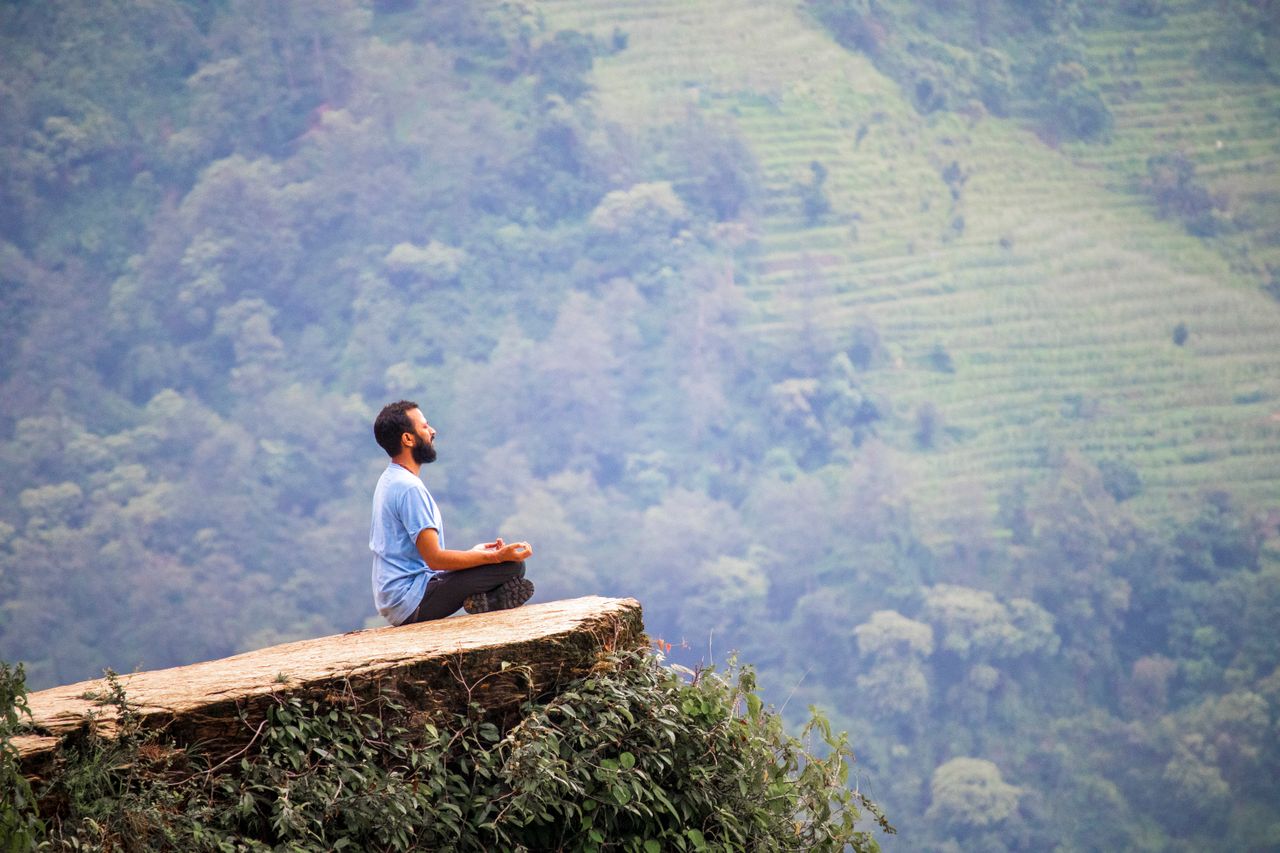
Yoga was born in the foothills of the Himalayas, and few countries let you practise it as close to that source as Nepal. Between the spiritual density of the Kathmandu Valley and the mountain calm of Pokhara, the country has quietly become one of the most rewarding places in the world to deepen a practice, whether you have a free morning, a free week, or a free month to give it.
This guide covers where to practise, what each option actually involves, what it costs, and the best time of year to come, so you can plan a trip that fits your schedule and your goals.
Why Nepal for yoga?
A few things set Nepal apart from the busier yoga circuits of India and Bali.
The air is the first. Practice centres in the hill country sit well above the smog line, and pranayama done in clean, thin mountain air genuinely feels different from breathwork in a city studio. The lineage is the second. The Himalayan Nath and ashram traditions have flowed through Nepal for centuries, and many of the country's serious teachers trained inside them for years rather than collecting a weekend certificate. The third is simple practicality. A visa on arrival covers most nationalities, English is spoken widely, and transfers from the airport to the mountains are short and easy to arrange.
Put together, it means you can land, settle, and be on your mat with snow peaks on the horizon within a day or two of arriving.
The styles of yoga you will find
Most reputable Nepali schools teach classical, traditional yoga rather than gym-style fitness flow. In practice that means a strong base in Hatha, with its slow, alignment-focused postures, often alongside Ashtanga, a set and vigorous sequence, and gentle Vinyasa. Just as important, you usually get the parts that modern studios skip: pranayama, or breath control, kriyas for internal cleansing, mantra and meditation, and the philosophy that holds the whole system together.
If you are a complete beginner, this is good news. The teaching tends to start from the ground up, with patient attention to foundations. If you are experienced, the depth is there too, in advanced asana, longer holds, and sustained meditation.
Pokhara: yoga with Annapurna in the window
If you picture yourself rolling out a mat with snow peaks on the horizon, you are picturing Pokhara. Sitting at the foot of the Annapurna range beside a calm lake, it is the country's unofficial yoga capital and the base for most mountain retreats.
The most authentic centres are not in the tourist strip of Lakeside but in the villages just above it, places like Ghachowk, a farming settlement at around 1,320 metres with uninterrupted views of Machhapuchhre, the "Fishtail" peak. If you are comparing the Pokhara yoga options, look for small group sizes, instructors trained in the Indian Himalayan ashram tradition, and honest all-inclusive pricing that covers your room, sattvic meals, and course materials rather than charging extra for every add-on.
Mornings here usually open before sunrise with meditation and classical Hatha, break for breakfast, and ease into a second session in the afternoon. It is a rhythm that suits first-timers and seasoned practitioners alike, and the setting does half the work: clean air, birdsong, terraced fields, and mountains that change colour through the day.
Going deeper: the residential retreat
A single class is a taste. A residential retreat is where the practice actually starts to change you.
Nepal's ashram retreats range from weekend resets to month-long immersions, and the best of them are run as genuine ashrams rather than wellness hotels. That usually means organic food grown on the farm, noble-silence options, sound healing, Ayurveda, and dharma talks woven around the asana. A well-structured yoga & meditation retreat in the Pokhara hills typically caps each cohort at a dozen or so students with two teachers in the room, so you are adjusted by name rather than lost in a crowd of fifty.
A few formats are worth knowing. A 3 to 4 day weekend immersion suits the time-poor and works well as a reset between treks. A 5 to 7 day programme gives you a proper change of state. Silent meditation retreats go deeper than postures, using noble silence and longer sits. Detox and Ayurvedic retreats pair the practice with diet, herbal support, and bodywork. If you can spare seven days, take seven, because the nervous system often does not fully settle until around day three.
Kathmandu: the spiritual heart of the valley
Most travellers land in Kathmandu, and it is worth building in a few days rather than rushing straight to the mountains. The valley holds Boudhanath, Swayambhunath, and Pashupatinath, centuries of living yogic and Buddhist tradition packed into a single bowl of hills.
The city's practice scene leans more toward holistic wellness than pure asana. If you are weighing up yoga Kathmandu options, you will find centres here often specialise in Reiki and energy healing, Tibetan singing-bowl sound therapy, and guided meditation alongside their classes and teacher training. That makes the city a good fit if you are recovering from a long-haul flight or want to combine movement with deeper healing work before or after a trek. The quieter centres sit on the green northern edge of the valley, near the Shivapuri forest, away from the traffic of Thamel.
Yoga and trekking, combined
One of the things Nepal does better than almost anywhere is let you put yoga and the mountains in the same week. Yoga trek packages pair a daily practice with a Himalayan walk, so your mornings begin with pranayama at altitude and your days are spent on the trail.
The two classic routes are Poon Hill, a gentler trek with famous sunrise views over the Annapurna and Dhaulagiri ranges, and Mardi Himal, a quieter and slightly more demanding climb toward the base of Machhapuchhre. On both, the yoga is adapted to how your body feels after walking, with restorative evening sessions to open tight hips and shoulders. These trips usually run in the clear-sky months, when the air is at its cleanest and the views are reliable.
Wellness beyond the mat
Many Nepali centres treat yoga as one part of a wider toolkit rather than the whole thing. It is common to find Tibetan singing-bowl sound baths, which use vibration to settle the mind, Reiki and energy-healing sessions, Ayurvedic consultation and treatments, and meditation taught in several different techniques.
If you are arriving stressed, jet-lagged, or simply curious, these add-ons are an easy way to round out a trip. A sound-healing session after a long flight, or a Reiki session at the start of a retreat, can help you drop into the slower pace much faster than you would on your own.
Yoga teacher training (YTT) in Nepal
Nepal has become a serious and affordable destination for Yoga Alliance recognised teacher training. The standard progression is 100-hour, a foundation course of around 11 days, then 200-hour, the full certification that lets you teach worldwide over roughly three weeks, and finally 300-hour, an advanced level for graduates of a 200-hour course.
Residential 200-hour programmes in Nepal typically cost a fraction of equivalent courses in the West, with meals and accommodation included. The immersion of living on site, with roughly six sessions a day across asana, pranayama, anatomy, philosophy, and teaching methodology, does far more for your practice than any commuter course can. If you intend to teach professionally, check that the school is a Registered Yoga School with Yoga Alliance, so your hours are recognised when you register as a teacher afterward.
The best time to visit Nepal for yoga
Nepal has two clear sweet spots, and knowing them makes a real difference to your experience.
Autumn, roughly October and November, is the most popular season for good reason. The monsoon has washed the air clean, the skies are clear, and the Himalayan views are at their sharpest. Days are mild and nights are cool. This is prime time for yoga treks and mountain retreats, so book early, because the best schools fill up fast.
Spring, roughly March to May, is the other strong window. The weather warms steadily, rhododendron forests bloom across the hills, and visibility stays good through most of the period. It is an excellent time for teacher training and longer retreats, with comfortable practice conditions both morning and evening.
Winter, December to February, is quieter and colder, especially at altitude, but the lower hill towns like Pokhara stay pleasant by day and the crowds thin out. If you prefer a calmer ashram with smaller groups, and you do not mind chilly mornings, winter has a real appeal of its own.
The monsoon, June to September, is the season most travellers avoid. It is green, lush, and cheaper, but rain is frequent and mountain views are often hidden behind cloud. City-based practice in Kathmandu and indoor work like sound healing, Reiki, and meditation still run perfectly well, so it is not a write-off, simply less suited to trekking and big-view retreats.
In short, come in autumn or spring for the classic Himalayan experience, consider winter for peace and low-season rates, and treat the monsoon as a city-and-healing trip rather than a mountain one.
What it costs
Nepal is one of the best value yoga destinations anywhere. As a rough guide, drop-in classes are inexpensive, residential retreats commonly start from around 150 euros for a weekend and rise with length and comfort level, and Yoga Alliance teacher training runs from several hundred euros for a 100-hour course to roughly 1,300 euros for an all-inclusive residential 200-hour programme. Most reputable schools fold accommodation, meals, and materials into a single price, so the main thing to watch for is hidden extras when you compare quotes.
A typical day, and what to pack
A day at a traditional ashram has a steady shape: an early wake-up, morning cleansing and meditation, a strong asana session, breakfast, free or study time, a lighter afternoon practice or workshop, herbal tea, evening meditation, then dinner and rest. Meals are usually sattvic and vegetarian, often grown on the property itself, with vegan and gluten-free options available on request.
Pack layers, because mountain mornings are cold even in spring, along with a refillable water bottle, comfortable clothes you can move in, and any personal items you rely on. Mats and props are almost always provided, so you can travel light.
Getting there and the visa
Most visitors fly into Tribhuvan International Airport in Kathmandu and pick up a visa on arrival, available to more than 80 nationalities. The options are 15 days, 30 days, or 90 days, paid in US dollars in cash, and you will need a passport photo or two. From Kathmandu to Pokhara you have three choices: a 25 minute domestic flight, a tourist bus of around 6 to 7 hours along the highway, or a private taxi of about 6 hours at your own pace. Most retreats and training schools arrange a free pickup once you reach Pokhara, so you rarely have to navigate the last stretch yourself.
How to choose a school
A few signals separate a genuine school from a tourist operation. Look for teachers with real lineage and years of training rather than a single certificate. Look for small group sizes, ideally in the low teens, so you get personal attention. Look for transparent, all-inclusive pricing and a clear booking and refund policy. Read recent reviews on Google and TripAdvisor, and message the school directly with your questions before you commit. A school that answers thoughtfully and quickly is usually a school that teaches the same way.
Choosing your path
If you have a morning, take a drop-in class. If you have a week, book a retreat. If you have a month and the calling, do your teacher training. And if you have any choice in timing, aim for autumn or spring, when Nepal shows you exactly why the practice belongs to the mountains in the first place.