

















Traveling with your pet can be a great adventure, but it needs a little forethought and preparation. Whether you’re going on a road trip, flying to another city, or staying in a pet-friendly hotel, you need to put your pet’s comfort, safety, and well-being above all else. Travel anywhere with your pet! It's easy and rewarding! With the right preparation, you and your four-legged friend can have a smooth, fun, and memorable trip.
Whether you are traveling by car or plane, you will know what to expect in terms of preparation, transport, accommodations , and care on the road when traveling with your pet.
Preparing Your Pet for Travel
Visit the Vet First
Visit your veterinarian to get a check-up before traveling. This lets us know that your pet is well enough to travel and is current on vaccinations. If you’re traveling by air or crossing international borders, some airlines and countries require health certificates and proof of vaccinations.
Ask your vet about:
- Motion sickness remedies
- Anxiety management options
- Microchipping and ID updates
Update Identification
Always make sure your pet is wearing a collar with an ID tag that has your name and phone number. Microchipping is also strongly recommended, particularly when visiting unknown locations.
Should your pet go missing, its chance of being safely returned is significantly improved with proper identification.
Choosing the Right Travel Method
Traveling by Car
Car travel is often the easiest and most flexible option when traveling with pets.
Tips for safe car travel:
- Use a pet seat belt, carrier, or crate to keep your pet secure
- Never let your pet roam freely inside the car
- Stop every 2–3 hours for bathroom breaks and exercise
- Never leave your pet alone in a parked car
Bring familiar items like your pet’s favorite blanket or toy to help them feel comfortable during the drive.
Traveling by Plane
Flying with a pet requires more planning. Airlines have specific rules regarding pet size, carriers, and cabin or cargo travel.
Key considerations:
- Small pets may be allowed in the cabin in an airline-approved carrier
- Larger pets often travel in climate-controlled cargo areas
- Some airlines restrict travel during extreme temperatures
- Certain breeds may have travel limitations
Always check airline policies well in advance and book early, as pet spots are often limited.
Public Transportation
Pets policies vary among trains, buses and ferries. Some permit small pets in carriers and others have restrictions on animals. Be sure to check the regulations in advance to avoid surprises.
Packing Essentials for Your Pet
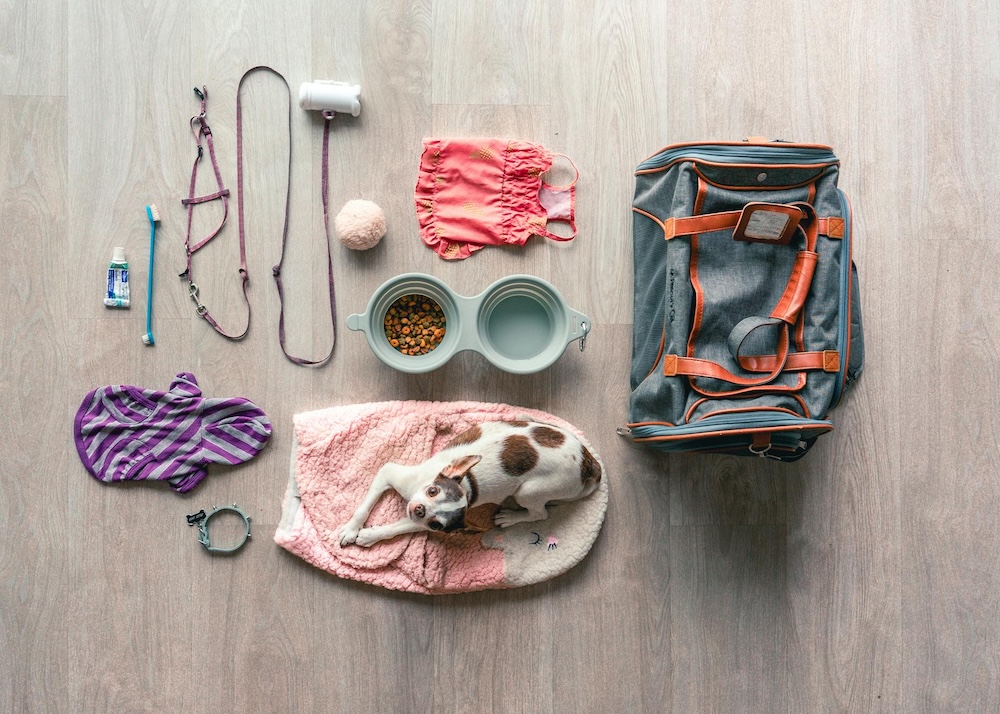
Just like you pack a suitcase for yourself, your pet needs their own travel essentials.
Must-have items include:
- Food and treats
- Collapsible food and water bowls
- Leash and harness
- Waste bags or litter supplies
- Medications and vet records
- Grooming wipes or towels
Keeping your pet’s routine as consistent as possible helps reduce stress during travel.
Finding Pet-Friendly Accommodations
Not all hotels or rentals are pet-friendly, so a little advance planning is necessary. Hotels now offer pet rooms, but policies are different.
When booking accommodations:
- Confirm pet policies in writing
- Ask about size or breed restrictions
- Check for additional fees or deposits
- Look for nearby parks or walking areas
Vacation rentals often provide more space, which can be ideal for pets who need room to relax.
Keeping Your Pet Comfortable During Travel
Managing Anxiety
Traveling is stressful for pets, particularly those unaccustomed to unfamiliar surroundings. Anxiety could be manifested as pacing, whining, or panting excessively.
Ways to help calm your pet:
- Stick to familiar feeding and walking schedules
- Bring familiar scents, such as their bed or blanket
- Use calming sprays or pheromone products
- Provide reassurance without reinforcing nervous behavior
For severe anxiety, consult your veterinarian for guidance.
Feeding on the Road
To help prevent your pet from becoming nauseous, don’t feed them immediately before a long car ride or flight. Rather, give small feedings and ensure he has water to avoid getting dehydrated.
Always pack extra food in case of delays.
Traveling With Different Types of Pets
Dogs
Dogs tend to take well to travel, particularly when they are trained and acclimated to car rides. They like to get breaks and exercise regularly, to keep them comfortable and calm.
Cats
Cats are generally more susceptible to alterations in their surroundings. A safe carrier is necessary, plus familiar bedding. Keep your cat indoors at your travel destination so he doesn't get lost.
Small Pets
Traveling with small animals (rabbits, guinea pigs, birds, etc.) demands a bit of a different focus. Provide good ventilation, cool temperatures, and low noise levels. Do your research on the specific species' travel requirements.
Safety Tips While Traveling
- Keep your pet on a leash or in a carrier in unfamiliar places
- Avoid letting pets drink from unknown water sources
- Be mindful of weather conditions
- Research emergency vet clinics at your destination
Preparation can prevent small issues from turning into major problems.
International Travel With Pets
International travel adds more layers of complication. Each country has its own set of rules for imports, quarantine requirements and vaccination protocols.
Steps to take:
- Research destination requirements months in advance
- Obtain required paperwork and certifications
- Check airline and customs regulations
- Plan for potential quarantine periods
Starting early is crucial when traveling internationally with a pet.
Making Travel Enjoyable for Everyone
Traveling with a pet requires patience, flexibility, and planning, but it's very fulfilling. Pets tend to love being with their humans, on outings, and experiencing things together.
It really comes down to you needing to have realistic expectations and ensuring that your dog’s needs are met. Not every event will be animal-friendly, and that’s fine too. Scheduling rest periods will help keep your pet happy and healthy during your vacation.
Final Thoughts
Traveling with your pet need not be stressful. By bringing on board your prioritization list, Supplies, and understanding your pet comfort level, It is possible to make the trip a safe and fun experience for both of you.
Whether you’re on a quick jaunt or a longer trek, a little advance planning means you and your furry friend can concentrate on the important things—fun, fun, fun, fun, fun, fun!