









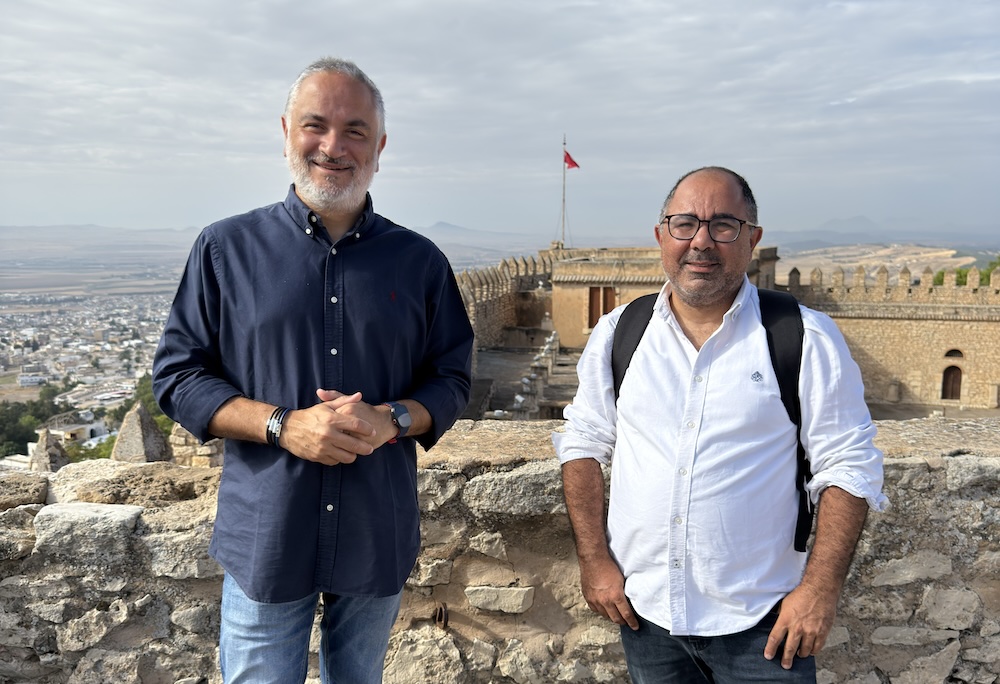
Mission Nature Tunisia was never meant to be a simple trip. It was a 10-day journey across a country of extraordinary contrasts, where history, nature, food and human stories constantly crossed paths.
From the white-and-blue streets of Sidi Bou Said and the ancient ruins of Carthage to the forests of Aïn Draham, the Roman remains of Bulla Regia, the agricultural landscapes of El Kef and Testour, and the markets, kitchens and workshops of Nabeul and Hammamet, Tunisia revealed itself as one of the Mediterranean’s most layered and surprising destinations.
Together with Dr. Marc Beyrouthy, I wanted to go beyond the postcard. We explored biodiversity, archaeology, agriculture, water, olive oil, traditional cooking, local products, ancient civilizations and the people preserving these traditions today. Along the way, we met farmers, chefs, artisans, academics, producers and families who helped us understand Tunisia through their land and their stories.
What impressed me most was the diversity. In one journey, Tunisia could feel Mediterranean, African, Arab, Phoenician, Roman, Andalusian and completely unique at the same time. Every stop opened another chapter: a plant became a lesson in biodiversity, a dish became a window into local history, and an archaeological site connected civilizations across the Mediterranean.
This post brings together the places we visited, the experiences we lived and the discoveries that made Mission Nature Tunisia 2025 much more than a travel series.
It became a journey into the soul of Tunisia.
Where We Went & What We Did
- Tunis
- Explored the capital and the Medina of Tunis
- Walked through the traditional souks
- Visited Zitouna Mosque and discussed its historical university
- Explored Tunisian architecture, crafts and old houses
- Ate traditional Tunisian breakfast and street food
- Discovered fricassé and other Tunisian specialties
- Explored Tunisian plants and ingredients
- Met chefs, locals and food specialists
- Sidi Bou Said
- Explored the famous white-and-blue village
- Walked its streets and viewpoints overlooking the Mediterranean
- Experienced traditional Tunisian food at Dar Zarrouk
- Discovered the northern suburbs of Tunis
- Returned again toward the end of the trip
- Carthage
- Explored the extraordinary archaeological remains of ancient Carthage
- Visited the Punic ports
- Explored Roman remains and baths
- Discussed Queen Elissa/Dido
- Followed the connection between the Phoenicians of Lebanon and Carthage
- Explored Punic agriculture, plants, pomegranates, olives and Mediterranean trade
- Visited the area around Byrsa and Salammbô
- Discussed Roman, Punic and early Christian history
This Phoenician connection becomes one of the recurring themes of the film.
- La Marsa / Northern Tunis Coast
- Explored the seaside neighborhoods
- Stayed and ate around the northern suburbs
- Experienced modern Tunisian life alongside the historical discoveries
- Ghar El Melh
- Explored the historic coastal/fishing community
- Learned about the relationship between the sea, wetlands, agriculture and local life
- Met local people
- Explored traditional fishing and food culture
- Bizerte
- Explored one of northern Tunisia’s major coastal cities
- Took a guided discovery of Bizerte
- Explored its maritime history
- Visited the fish/marine museum
- Discovered local seafood and fishing culture
- Tunisia’s Olive Country
- Drove through enormous landscapes covered with olive trees
- Learned how important olives are to Tunisia
- Discussed Tunisia’s olive-growing traditions
- Visited producers
- Learned how olive oil is made and evaluated
- Did professional olive-oil tasting
- Compared varieties, acidity, aromas and quality
- Visited a family estate producing olive oil and cheese
Olive oil becomes one of the major Mission Nature themes throughout the trip.
- Aïn Draham
- Entered a completely different Tunisia: mountains and forests
- Explored the green northwest
- Discovered its climate, vegetation and biodiversity
- Stayed in the mountain region
- Experienced local northern Tunisian food
- Bulla Regia
- Explored the important Roman archaeological site
- Discovered its unusual architecture and underground houses
- Examined mosaics and Roman daily life
- Discussed Roman engineering, baths and adaptation to climate
- El Kef
- Explored this historic northwestern city
- Learned why El Kef was strategically important between Tunisia and Algeria
- Explored its history and architecture
- Visited the Higher School of Agriculture
- Met academics/students
- Explored the biodiversity and agriculture of northwestern Tunisia
- Had a major introduction to traditional cuisine from El Kef
- Cooked/tasted regional dishes
- Testour
- Explored the historic Andalusian-influenced town
- Discovered its distinctive architecture and heritage
- Learned about Testour pomegranates
- Discovered local olive oil
- Cooked with locals
- Learned traditional Testouri recipes
- Tasted local cheese
- Explored products tied directly to the surrounding agricultural land
- Sidi Salem Dam / Northern Agricultural Region
- Stopped at Tunisia’s largest dam
- Discussed water, irrigation and agriculture
- Connected water management to Tunisia’s farming ecosystem
- Nabeul
- Entered one of Tunisia’s great food and craft regions
- Explored the market
- Discovered Nabeul pottery and ceramics
- Learned how traditional pottery is made
- Explored the culture of the Cap Bon region
- Discovered peppers and spices
- Learned about authentic Tunisian harissa
- Saw traditional preparation methods
- Explored foods made with peppers, olive oil and spices
- Discovered handmade couscous and traditional bread
- Cooked and ate with local women/artisans
- Hammamet / Yasmine Hammamet
- Explored the Mediterranean resort area
- Visited the recreated Mediterranean city
- Explored architecture inspired by different periods of Tunisian history
- Visited the Museum of Religions and Civilizations
- Discussed Tunisia’s Muslim, Christian and Jewish heritage
- Explored Carthaginian, Roman, Arab and Mediterranean history
- Visited Carthage Land
- Experienced the more playful/family side of Tunisia
- Tunisian Cooking School / Culinary Training
- Marc and Anthony joined a professional cooking experience
- Learned to make fish couscous
- Discussed regional couscous traditions
- Learned about harissa
- Prepared Tunisian salads
- Learned about brik
- Explored the central role of tuna, eggs, olives and olive oil
- Learned the difference between household and professional Tunisian cooking
The captions spend a substantial section on preparing authentic fish couscous and explaining why olive oil, tuna, eggs and harissa are so central to Tunisian cuisine.
- Farms & Producers
- Visited agricultural estates
- Explored edible flowers/plants
- Met olive growers
- Visited cheese producers
- Tasted aged goat cheeses
- Learned about local farming techniques
- Explored Tunisia’s relationship with water and drought
- Discussed which plant varieties survive Tunisia’s climate
- Tunisian Wine
- Explored another less-known side of Tunisian agriculture: wine
- Tasted/discussed Tunisian wines
- Connected viticulture with Tunisia’s Mediterranean climate and agricultural history
- Food, Food & More Food
Throughout the 10 days you tasted or explored couscous with fish, brik, fricassé, bambalouni, harissa, Tunisian salads, grilled peppers, tuna, seafood, fish, cheeses, olive oil, traditional breads, pastries, sweets, pomegranate products, local breakfasts, home cooking and regional dishes.
And importantly, you weren’t simply eating them—you repeatedly went behind the food, meeting the people who make it, cooking with them and explaining where the ingredients come from.
The real storyline of the movie
I’d describe the journey as:
Tunis → Sidi Bou Said → Carthage → Ghar El Melh → Bizerte → Olive Country → Aïn Draham → Bulla Regia → El Kef → Testour → Nabeul → Hammamet → back to Tunis/Sidi Bou Said
with side trips to farms, universities, archaeological sites, forests, dams, producers, restaurants, markets, workshops and kitchens.