














Planning a large corporate event in New York City means building a budget before you have most of your answers. The guest count is an estimate. The venue is a shortlist. The date might still be moving. Yet somewhere in a spreadsheet, a line item for food and beverage has to hold a number that finance will approve, and that will still be accurate six months from now.
That is where most planners get stuck. Corporate event catering cost NYC figures vary widely across the city, and the reason is rarely the food itself. It is everything the food has to travel through to reach a guest in a raw loft in Brooklyn, a museum atrium in Manhattan, or a rooftop in Long Island City at seven in the evening in July.
Understanding what actually sits inside that number makes it far easier to build a budget you can defend, adjust intelligently, and explain to the people signing off on it.
The Guest Count Is the Starting Point, Not the Whole Story
Per-person pricing is the most familiar way to think about catering, and it is a useful anchor. But for large-scale events, the per-person figure behaves less like a fixed price and more like an average that shifts based on how the event is structured.
A seated dinner for six hundred requires a very different kitchen operation than a standing reception for the same six hundred. The seated dinner needs synchronized plating, a larger service team, more equipment, and a longer setup window. The reception needs volume, replenishment, and stations positioned so that crowds keep moving. Both can be exceptional. They will not cost the same.
Guest count also affects cost in ways that are not linear. Moving from two hundred to four hundred guests does not simply double the number. It can change which kitchen setup is required, whether additional equipment has to be brought in, and how many staff are needed to serve within an acceptable window. Those thresholds are worth asking about early, because they are where budgets quietly break.
Venue Is the Variable Most Budgets Underestimate
New York rewards distinctive venues, and distinctive venues rarely come with commercial kitchens. Many of the city's most striking event spaces are non-exclusive, meaning you bring in your own caterer. That flexibility is a real advantage. It also means the catering team is responsible for infrastructure the venue does not provide.
Building a temporary kitchen on site involves equipment rental, power planning, refrigeration, prep space, and often a load-in through a freight elevator on a strict schedule. A space with no service elevator, a narrow loading dock, or a union building policy can add hours of labor before a single dish is prepared.
None of this shows up on a menu. All of it shows up in a quote. Cloud Catering has worked across venues throughout the five boroughs since 2011, and the operational read on a space is usually the fastest way to understand why one venue costs more to cater than another that looks similar on paper.
The practical takeaway is simple. Before you finalize a venue, ask your catering partner to look at it. A twenty-minute conversation about kitchen access, power, and load-in can save more money than any menu adjustment.
Service Style Shapes Labor, and Labor Shapes the Number
Staffing is the second largest driver of corporate event catering cost NYC planners encounter, and it is directly tied to how you want the evening to feel.
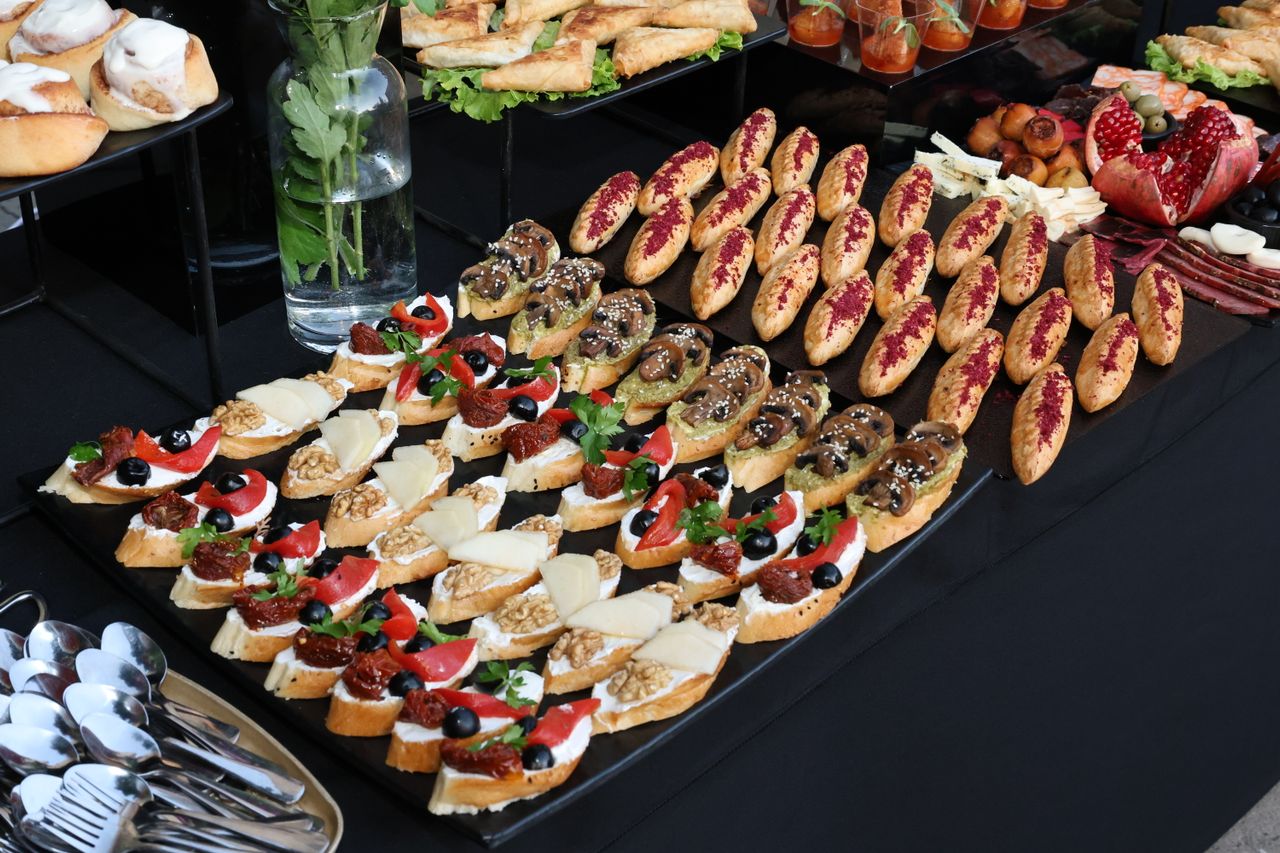
Plated dinner service at a high standard requires a meaningful staff-to-guest ratio, because courses need to land together across the room. Station-based service requires attendants at each point, plus runners keeping everything replenished. Passed hors d'oeuvres during a long reception window require more circulating staff than a short one.
There is also the part guests never see. Setup crews, kitchen teams, captains coordinating timing with your production schedule, and breakdown staff who reset the space afterward all sit inside the total. For an event with a hard load-out time, breakdown labor can be significant.
None of this means a leaner approach is worse. It means the service style should be chosen deliberately, with a clear understanding of what it does to the number, rather than selected first and reconciled later.
Menu Complexity Costs More Than Ingredients Do
Ingredient quality matters, and premium proteins and seasonal produce carry real cost. But at scale, complexity is often the bigger factor.
A dish with six components that must be assembled at the moment of service takes more hands and more time than a dish with three components that hold beautifully. Multiply that by six hundred plates, and the labor difference becomes substantial. The same is true for extensive dietary accommodation. Serving a room well when a meaningful percentage of guests require gluten-free, plant-based, kosher-style, or allergy-conscious options is entirely achievable, and it requires separate prep, separate handling, and tighter tracking.
Good catering teams will tell you where complexity is worth it and where it is not. Often the most memorable course on a menu is not the most expensive one to execute. It is the one designed to be finished perfectly at volume.
Timing, Season, and the Calendar Effect
New York's event calendar has clear peaks. Late spring and the stretch from October through mid-December put pressure on staffing, rentals, and vendor availability across the city at once. Booking into a peak window is not a problem, but it does mean less flexibility on pricing and a shorter runway on decisions.
Event timing within the day matters too. Evening events in buildings with restricted load-in hours, weekend events with overtime implications, and multi-day programs that require the same team across consecutive days all carry different cost profiles.
If your date has any flexibility, testing two or three options with your caterer before locking it is one of the easiest ways to control the total.
How to Build a Budget That Holds
The most reliable approach is to give your catering partner real constraints early. A target number, a guest range, a venue or venue type, and a sense of what the event needs to accomplish will produce a far more accurate picture than a request for a general price list.
From there, ask for the quote to be broken into food, beverage, staffing, rentals, and any venue-specific requirements. That structure lets you adjust one lever without guessing at the others. If the number needs to come down, you can see whether the answer is a simpler service style, a shorter reception window, or a menu built around dishes that execute cleanly at volume.
Corporate event catering cost NYC conversations go better when they start with what the event needs to do rather than with a menu. The teams that plan large events well in this city are not the ones who found the cheapest number. They are the ones who understood what they were paying for and spent it where guests would actually notice.