

















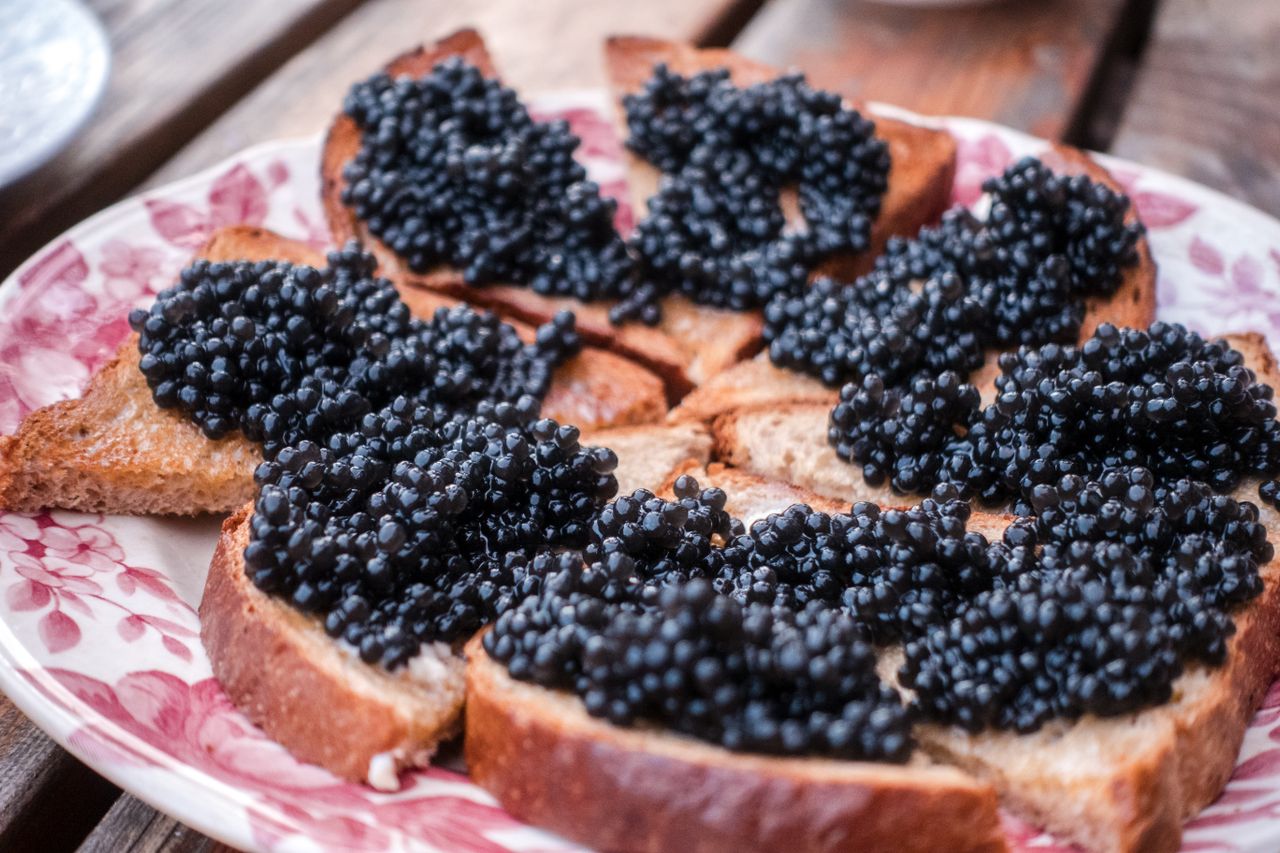
It's the question nearly everyone asks while the little tin is still sitting on the table: is this going to taste good? Caviar has a reputation for being intimidating, but the caviar taste is far more approachable than its price tag or fancy image suggests. Here's what to expect before that first spoonful.
What Does Caviar Taste Like?
According to Caviar Star's tasting guide, good caviar tastes clean, delicate, buttery and lightly briny, and never overwhelmingly fishy. Texture is just as important as flavor. Look for glossy, intact pearls that range from soft and creamy to a firmer pop that releases flavor gradually. Britannica describes caviar as salted sturgeon roe, so a gentle saltiness is part of the experience.
How the Main Types Compare
Different sturgeon gives different results. Osetra is buttery with subtle brine and nutty notes, often compared to toasted hazelnut or walnut, with medium, firm pearls. Beluga is creamy, mild and buttery with large, silky pearls that almost melt on the palate, and it is softer and less complex than Osetra.
Sevruga has smaller pearls and a more assertive saltiness, buttery yet earthy with oceanic notes, which suits diners who want a stronger seafood flavor. Kaluga, sometimes called "river Beluga," offers large, glossy pearls with a firm pop, creamy salinity and a clean finish, and Caviar Star presents it as an approachable pick for beginners.
Why Flavor Varies So Much
Caviar Star notes that flavor is shaped by species, the age and environment of the fish, its diet, salt level, pasteurization, storage and harvest timing. Time is a big factor. California Sea Grant explains that wild female white sturgeon need 15 to 20 years to reach reproductive age, while farmed fish can get there in as little as seven, compared with two years or less for most farmed marine species, a reminder of how much patience sits behind a single tin.
Tips for Your First Tasting
Serve caviar cold and use a non-metallic spoon, since metal can alter its flavor. Take a small portion, let the roe rest briefly on your tongue before chewing, and enjoy it slowly so the flavors unfold. A sip of chilled vodka or crisp champagne between bites resets the palate. For a simple, classic start, try it on a warm blini with a touch of crème fraîche.
If you want to learn what you like, sample two or three varieties side by side, as Caviar Star suggests. Comparing texture, saltiness and finish in one sitting is the fastest way to find your favorite, and it makes for a fun dinner-table game with friends.
Wondering whether caviar is supposed to taste fishy? Caviar Star's guide says good caviar should not be overwhelmingly fishy, and that fresh caviar smells clean and ocean-like, never musty or off-putting. If a tin smells off, that is your cue to skip it. For drinks, the guide recommends dry champagne, vodka, Chablis or Sauvignon Blanc, and suggests avoiding sweet or fruity pairings that compete with the roe.
Reading the Menu Like a Regular
Restaurant menus can make caviar feel like a secret language, but a few details decode most of it. Britannica notes that caviar is salted sturgeon roe, and its entries name beluga, sevruga and osetra as familiar types, so the species listed tells you a lot about what to expect. Beluga leans creamy and mild, Osetra buttery and nutty, and Sevruga more assertive. Portion size is the next clue: Caviar Star's guidance puts a serving at roughly a half ounce to one ounce per guest, with five to ten grams as a tasting or garnish portion, so a modest spoonful is normal, not stingy.
Also look at how it is served. Good service means the caviar arrives chilled, ideally between 26°F and 34°F according to Caviar Star, on ice, with a non-metallic spoon such as mother-of-pearl, bone, shell or glass. Silver can react with the roe and alter its taste, so a pearl spoon is a good sign that the kitchen respects the product.
What Goes Best on the Plate
Classic accompaniments keep the focus on the roe: a warm blini or toasted baguette slice, a little crème fraîche, and optional chopped chives, finely diced red onion or crumbled hard-boiled egg. A plain kettle chip works as a carrier too. If you are feeling playful, the guide suggests trout roe on a bagel with cream cheese, or on a deviled egg or sushi roll, which is a handy reminder that roe is not only for formal dinners.
Common First-Timer Questions
Do you chew caviar? The guide suggests letting the pearls roll across the palate and pressing them gently with your tongue rather than chewing. How much is too much? Less than a tablespoon at a time is typical. How should it smell? Fresh and ocean-like, never musty or off-putting. And is it worth trying more than one kind? Absolutely, because the differences between species are the whole point.
A Simple Plan for a Home Tasting
If you want to explore caviar at home, treat it like a wine flight. Choose two or three varieties, say a Beluga, an Osetra and a Sevruga, and serve them cold in separate bowls over ice, each with its own clean non-metallic spoon. Taste the mildest first and the most assertive last, resting each spoonful briefly on the tongue before pressing the pearls gently. Cleanse the palate with a sip of chilled vodka or champagne between samples, then compare texture, saltiness and finish.
Jot down what you notice, because a tiny tasting note makes ordering, or buying, far easier next time. Over a few sittings you will start to recognize your own preferences, and the next menu you read will feel a lot less mysterious.
One last note on temperature. Caviar Star's guide stresses that heat and air are caviar's biggest enemies, so the tin should stay covered when it is not in use and be opened only when you are ready to serve. If a restaurant leaves it sitting out uncovered while you wait, that is worth noticing, and it is a fair reason to ask for a fresh, chilled presentation.
Ordering With Confidence
The next time caviar appears on a menu, you will know what to ask for. Check which species is being served, whether it is the mild, creamy Beluga or the more assertive Sevruga, and how it will be presented.
Armed with that, the first spoonful stops being a gamble and becomes a small adventure. From there, it is just a matter of finding the style that suits your palate and savoring it.