











There is a Lebanon we all know, and another one we keep passing without ever really seeing. It hides behind the highway exits we never take, beyond the village signs we read from the car, inside old houses whose doors have been closed for generations, in churches we have photographed but never entered, in forests we cross without knowing their names, and in the hands of farmers, bakers and craftsmen who continue doing what their fathers and grandfathers did before them. This is the Lebanon I keep searching for. After years on the road, after hundreds of journeys and more than a thousand Lebanese villages visited, I have come to understand that discovering this country is almost impossible to finish. The more you see, the more there is to see. Every road seems to hide another road, every village sends you toward another village, and every person you meet knows someone else you absolutely have to meet. Mechwar Bel Wadi was born from this simple curiosity, from the pleasure of getting into a car without knowing exactly what the day will bring, and this complete season, gathered into more than seven hours of film, became much more than a collection of episodes. Watched from beginning to end, it feels like one very long day on the road, one uninterrupted journey through the Lebanon I love.
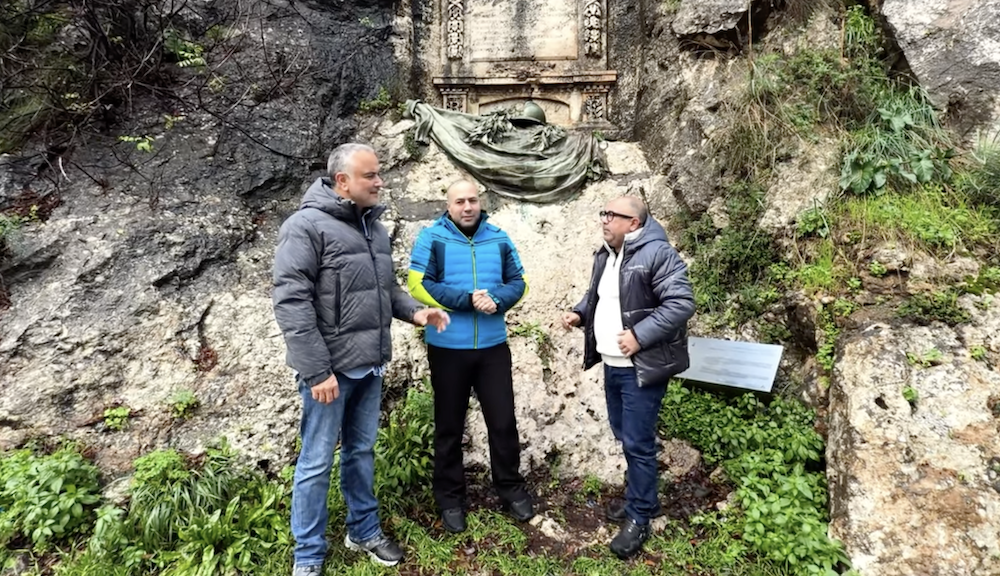
We begin at Nahr El Kalb, where thousands of cars pass every day between Beirut and the north, most of them moving too quickly to notice that one of the greatest history books in the country has been carved directly into the mountain beside them. We stop, and suddenly the noise of the highway becomes irrelevant. Egyptians, Assyrians, Babylonians, Romans and armies from much more recent times all crossed this narrow passage before us, leaving their marks on the rock. For thousands of years, people have been passing through here, conquering, retreating, trading, traveling, dreaming of whatever waited on the other side. Today we cross it in a car with cameras, looking for stories. There is something humbling about that thought. Lebanon constantly does this to you: it makes history appear where you least expect it. You can be stuck in traffic and be only meters away from three thousand years of civilization. You can drink coffee beside Roman stones, eat breakfast in a village whose foundations are older than entire countries, or walk into a tiny church and discover that its walls have witnessed wars, epidemics, migrations and generations of families whose names still exist today.
From Nahr El Kalb we climb toward Jeita, and the journey begins to find its own rhythm. Jeita is known around the world for its grotto, but the grotto is only the beginning. Above that immense underground world is a living village: houses, churches, olive trees, trails and people whose lives have unfolded for generations over caves sculpted silently by water for millions of years. We walk, listen and ask questions. We discover stories that would never appear on a road sign. Soon enough, as always happens in Lebanon, history gives way to food. Fresh bread arrives, a manoushe is pulled from the oven, olive oil is poured, someone starts talking about carob and suddenly an ingredient I have tasted countless times becomes a lesson in agriculture, memory and survival. This is one of the things I love most about Lebanese food: nothing exists alone. A spoon of carob molasses leads you to a tree, the tree leads you to a farmer, the farmer leads you to a family, and the family leads you back through generations. Food becomes geography. Food becomes history. Food becomes a way of understanding why people settled where they did and how they learned to live from the land around them.
The road climbs again through Bekfaya and toward Tarchich, and within a short distance the Mediterranean Lebanon begins to disappear behind us. Stone houses give way to mountain roads, the air becomes colder, clouds descend and snow begins to appear. This tiny country has an extraordinary ability to change its face every few kilometers. One moment you are looking toward the sea; not long afterward you are driving through white mountains with visibility disappearing around the next bend. There is no reason to hurry. On Mechwar Bel Wadi, arriving has never been the point. The road is the point. We continue through Ain Treiz and Rishmaya, places that today can feel quiet but once belonged to a very different Mount Lebanon, one of monasteries, schools, agriculture and silk. I try to imagine these mountains covered in mulberry trees, families raising silkworms, factories operating in villages that today seem asleep, Lebanese silk leaving these valleys and traveling toward distant markets. History rarely disappears all at once. It fades piece by piece: a factory closes, a field is abandoned, a craft loses its final apprentice, an old house collapses, a grandmother dies without anyone writing down her recipe. Eventually we forget that another world ever existed there. Perhaps this is one of the reasons I have become almost obsessed with documenting Lebanon. A camera cannot save everything, but it can preserve a voice, a face, a movement of the hands, a building, a recipe or a story long enough for somebody in the future to rediscover it.
By the time we reach the Chouf, the journey has changed again. The cedar forests surround us and the noise of the road gives way to something older and quieter. We Lebanese have placed the cedar on our flag, repeated its symbolism since childhood and turned it into an image recognized around the world, yet standing among these trees makes all those symbols suddenly physical. Some things have to be experienced rather than explained. The people protecting these forests understand that preservation is not simply about putting a fence around nature. A forest survives because the communities around it believe it is worth protecting. A village survives for much the same reason. A farmer continues planting because someone buys what he grows. A craftsman continues working because someone values what his hands can make. A bakery lights its oven every morning because people still come for its bread. A young Lebanese person stays in his village because he can imagine a future there. The thought follows us toward Deir El Qamar, where Lebanon seems to have compressed centuries into a few stone streets. We walk under arches, through courtyards and past palaces, churches and old houses, and every beautiful façade becomes more meaningful once someone tells us who lived behind it. Nearby Baakline adds another chapter, another reminder that the villages of Mount Lebanon were never isolated dots on a map but parts of a constantly shifting story of families, power, religion, trade and community.
We keep moving south until the landscape turns green with the great pine forest of Bkassine. Even before seeing the village properly, you can smell that you have arrived somewhere different. Here again the land brings us back to the people who work it. We meet producers transforming what grows around them into honey, carob and products that travel far beyond the village. These encounters have become some of my favorites over the years because they remind me that the Lebanon worth celebrating is not only the Lebanon of monuments and landscapes. It is the Lebanon that wakes up early and produces something. The woman filling jars in a small kitchen, the farmer climbing into his orchard, the baker standing in front of the fire, the craftsman sitting at the same workbench his father once used — these people rarely describe themselves as heroes, but they are quietly keeping entire pieces of our culture alive.
Then Jezzine appears, dramatic as ever, suspended above its valley with water falling beneath it. It would be easy to come here, photograph the waterfall and leave, but that would mean missing almost everything. We wander through the town, enter its churches, meet its people, eat its food and eventually find ourselves watching the craftsmen behind the famous Jezzine knives. Their hands move with the confidence of people who have repeated the same gestures thousands of times: cutting, shaping, engraving, polishing. Watching them, I think again about how fragile heritage really is. We can place an old knife behind glass and call it preservation, but the true heritage is in the hands that know how to make it. Once those hands disappear without teaching another pair of hands, the craft becomes history. Outside town, the apple orchards tell a similar story. A Lebanese apple is never simply an apple when you have stood beside the person who planted the tree, waited through winter, protected it through spring and harvested its fruit. “Buy Lebanese” sounds like a slogan until you meet the farmer. Then it becomes personal. Buying his apples means helping him stay on his land. It means keeping terraces cultivated, families working and villages alive.
And naturally, somewhere between all these stories, we eat. We always eat. Tables fill with labneh, vegetables, bread, pickles, kebbeh, meat and olive oil until there is nowhere left to place another dish, at which point someone inevitably arrives carrying another dish. Someone insists we haven’t eaten enough. Someone tears bread and passes it across the table. Coffee appears. Dessert follows. The schedule is forgotten. This may be the most Lebanese part of the entire journey: food turning strangers into friends before anyone notices it happening. I have spent years telling stories about Lebanon through food, but perhaps what fascinates me most is not what is on the plate. It is what happens around it. Lebanese food creates conversation. It gathers people. It gives us an excuse to sit long enough to listen to one another. A meal becomes an interview without questions, and somewhere between the first plate and the final coffee, another story inevitably begins.
Eventually the mountains release us and we descend toward Saida. The Mediterranean returns, the forests disappear behind us, and suddenly we are inside another Lebanon entirely. Narrow souks replace mountain roads, shopkeepers call from behind counters, craftsmen work inside tiny workshops, food aromas escape into stone alleys and centuries of Mediterranean life seem piled one above another. We arrive thinking Saida will be the end of the journey and immediately realize it could easily be the beginning of another. This always happens in Lebanon. Every destination creates another list. Every person says, “Before you leave, you have to see this.” Every restaurant owner knows a producer. Every farmer knows an old man with a story. Every village has another village behind the mountain. Seven hours of film suddenly feel very small.
And perhaps that is the real story of this season. It is not about Nahr El Kalb, Jeita, Bekfaya, Tarchich, Ain Treiz, Rishmaya, the Chouf, Deir El Qamar, Baakline, Bkassine, Jezzine or Saida individually. It is about what happens between them. It is about choosing to stop instead of passing through. It is about understanding that Lebanon is not one image, one cuisine, one religion, one landscape or one story. It is layers upon layers of people who have lived on this small piece of land and left something behind. It is the farmer and the monk, the baker and the craftsman, the grandmother cooking without a recipe and the young entrepreneur trying to build a future in the village where his grandparents were born. It is those who left and spend their lives missing it, and those who stayed and continue fighting for it in the simplest possible way: by waking up tomorrow and doing their work again.
After all these years and all these kilometers, I no longer believe my job is to tell people that Lebanon is beautiful. We know it is beautiful. Beauty is the easy part. What interests me are the reasons behind that beauty: the people, memories, traditions and stubborn determination that keep it alive. This is why I continue driving, filming, knocking on doors, asking questions and sitting at tables. I want to document the Lebanon that exists beyond the headlines and beyond the postcard, before some of it disappears. More than seven hours of Mechwar Bel Wadi may sound like a very long journey, but when the final road disappears behind us, I am left with exactly the same feeling I have had after every trip around this country: we have barely started. There are still villages we haven’t entered, people we haven’t met, recipes we haven’t tasted, doors we haven’t opened and stories we haven’t heard. Lebanon doesn’t need to be invented or embellished. It simply needs us to slow down long enough to see it. So we get back in the car, turn on the cameras and continue. The road is still there, and somewhere around the next corner, another story is waiting.