












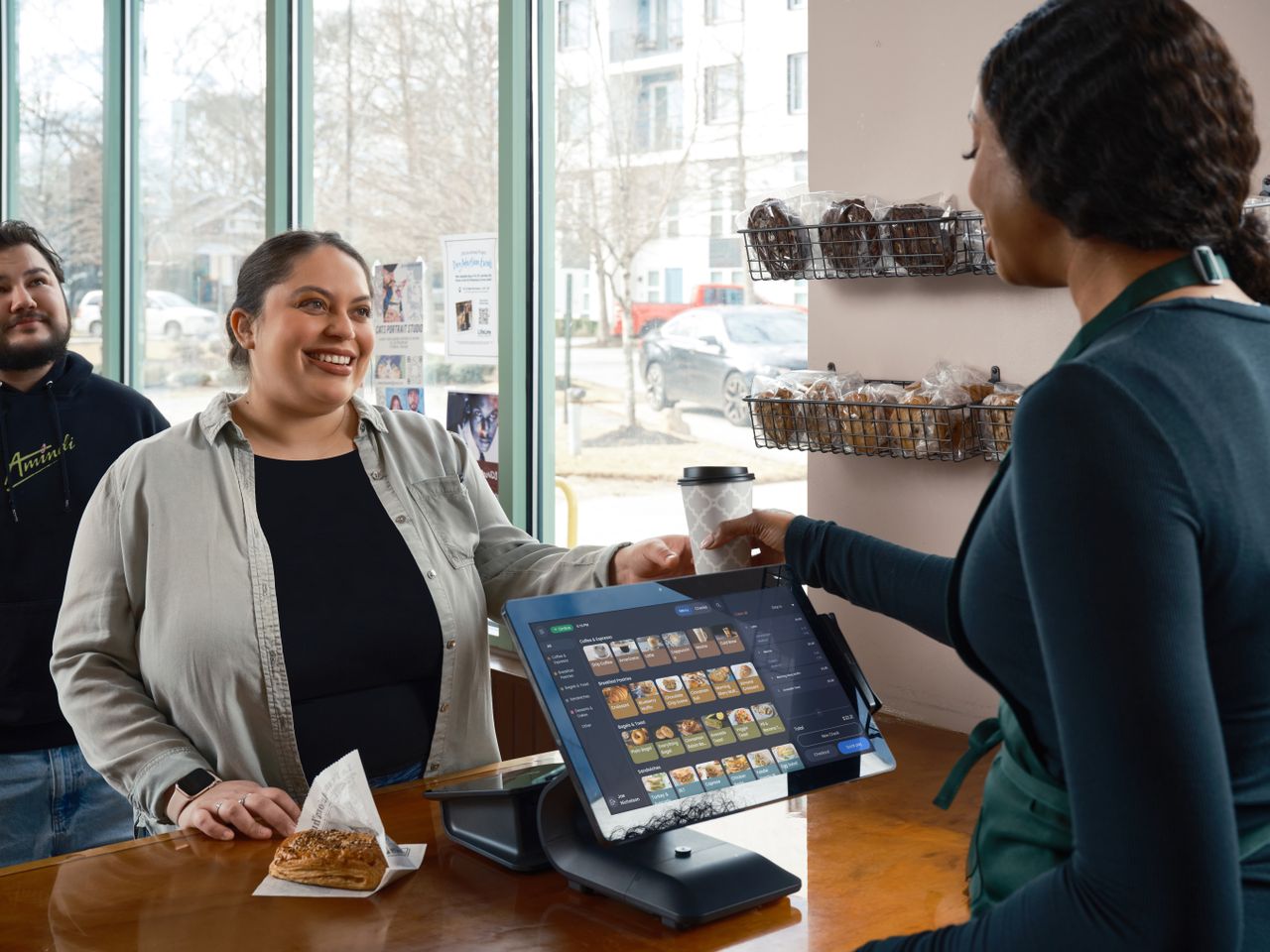
Most cafe owners don't realize their POS system is costing them customers until it's too late. The top cafe POS systems on this list were picked because they handle the situations that break average setups: a Saturday morning rush where every second counts, a delivery tablet that won't sync with the kitchen, or inventory numbers that drift further from reality every week. After reviewing dozens of platforms across real operator feedback, feature documentation, and industry use cases, this guide narrows it down to five systems actually worth your attention.
The shortlist methodology
Each option was assessed using publicly available information pulled from review platforms, case study archives, official product pages, and software directory listings. Only platforms with a documented track record serving food and beverage businesses made the cut.
→ See the full research breakdown
- BLogic Systems - Best for integrated payments and offline reliability
- TouchBistro - Best for restaurant POS and operations management
- Epos Now - Best for multi-location hospitality management
- HungerRush - Best for quick-service and fast-casual restaurants
- Loyverse - Best for small to medium-sized cafes and restaurants
Why Top Cafe POS Systems Are More Than a Line Item
A cafe POS system isn't just a cash register with a touchscreen. It's the nerve center of your entire operation, and when it struggles, everything downstream does too.
Peak hours expose weak systems fast. Slow order processing backs up the line, frustrates customers, and puts your staff in impossible situations.
Inventory tracking is another place where the wrong system quietly drains money. Without real-time visibility, ingredient waste builds up in ways that are hard to catch until the margins tell the story.
The right POS handles both, and it connects cleanly to delivery platforms without requiring a separate workaround for every order. Choosing well here means lower average transaction times, stronger system reliability on your busiest days, and payment processing fees that don't quietly eat into already tight margins. That kind of operational fit is genuinely hard to overstate.
Quick-Look Comparison: 5 Best Top Cafe POS Systems
Note: All data in this table is sourced from review platforms and the official websites of the listed companies.
|
Company Name |
Years Operating |
Headquartered In |
|
BLogic Systems |
Since 2010 |
San Jose, California, USA |
|
TouchBistro |
Since 2010 |
Toronto, Canada |
|
Epos Now |
Since 2011 |
Norwich, UK |
|
HungerRush |
Since 2003 |
Houston, Texas, USA |
|
Loyverse |
Since 2014 |
Limassol, Cyprus |
-
BLogic Systems - Best for Integrated Payments and Offline Reliability
What Problems Does BLogic Systems Solve?
BLogic Systems tackles one of the most persistent headaches in cafe operations: the gap between your POS, your payments, and your back-of-house data. Built for restaurants and hospitality businesses since 2010, they offer a single dashboard that covers POS software, inventory tracking, employee scheduling, and delivery connections with platforms like DoorDash, Uber Eats, and Grubhub. Their BlogicPay® processing even includes an optional 0% credit card fee program, which is a genuinely rare setup for a POS platform of this depth.
Where Does BLogic Systems Win for Top Cafe POS Systems?
BLogic Systems solves the offline reliability problem that most internet-only systems quietly ignore, keeping payment processing running even when the internet drops. For cafes that can't afford interruptions during a morning rush, that hybrid architecture is the kind of built-in protection that actually matters.
Real-World User Take:
Operators consistently point to the 24/7 live support and dedicated setup as standouts, which makes sense given the platform's depth. The fact that they've processed over $10 billion across 5,000 to 6,000 merchants suggests this isn't a new experiment. The integrated payments piece tends to get the most praise because it removes the friction of managing a separate processor.
-
TouchBistro - Best for Restaurant POS and Operations Management
What Problems Does TouchBistro Solve?
TouchBistro is an iPad-based POS built from the ground up for food service, not adapted from a generic retail system. Founded in 2010, the platform handles tableside ordering, kitchen display systems, menu customization, inventory management, and payment processing in a modular setup. Pricing starts at $69 per month (not cheap for a brand-new solo cafe, but reasonable for what you get), and the platform now powers more than 29,000 restaurants across 100 countries. The hybrid architecture means the system keeps running offline, which removes one of the biggest risks for busy cafe environments.
Where Does TouchBistro Win for Top Cafe POS Systems?
TouchBistro's tableside ordering and kitchen display setup shortens the gap between a customer placing an order and the kitchen receiving it, which directly cuts average transaction time. Their modular pricing also means a small cafe can start lean and layer in features as the operation grows, rather than paying for tools they won't use for another year.
Real-World User Take:
Reviews consistently highlight how straightforward the system is for staff to learn, which matters enormously in a high-turnover environment. Operators appreciate the offline reliability most during peak hours when internet connections get spotty. The customizable menu setup is another recurring positive, especially for cafes with rotating seasonal menus.
-
Epos Now - Best for Multi-Location Hospitality Management
What Problems Does Epos Now Solve?
Epos Now is an internet-based POS platform built for hospitality operators managing more than one location, though single-site cafes use it too. Founded in 2011 and now serving around 90,000 merchant locations across 11 countries, they generate revenues above $150 million annually, which signals a platform with serious staying power. Their app store carries over 130 connections, covering everything from delivery platforms to accounting tools. The Sidekick assistant is a newer addition that handles support queries and reportedly automates up to 70% of support demand, freeing up human time for actual operations.
Where Does Epos Now Win for Top Cafe POS Systems?
Multi-location cafe operators deal with a version of inventory chaos that single-site owners don't face: stock levels, pricing, and staffing data scattered across locations with no clean way to compare them. Epos Now's centralized dashboard addresses this directly, giving operators a single view across sites rather than logging into four separate systems. That kind of visibility tends to show up in faster decisions and less waste.
Real-World User Take:
The review patterns around Epos Now split fairly clearly. Operators who manage multiple sites tend to be enthusiastic about the remote access and centralized reporting. Some smaller single-location users find the platform broader than they need, but that's more a fit issue than a product flaw.
-
HungerRush - Best for Quick-Service and Fast-Casual Restaurants
What Problems Does HungerRush Solve?
HungerRush is a restaurant technology platform that's been building for quick-service and fast-casual operators since 2003. Their flagship product, HungerRush 360, wraps POS, digital ordering, delivery management, kitchen operations, and payment processing into one connected system. The numbers are telling: 7,000 restaurants globally, $5 billion in pizza sales processed monthly, and partnerships with names like Grubhub and Jet's Pizza. They've added text-to-order capability through OrderAI, and their Menufy acquisition brought a full online ordering platform into the mix (not a bolt-on, but a purpose-built piece of the stack).
Where Does HungerRush Win for Top Cafe POS Systems?
High-volume quick-service environments live and die by order speed, and HungerRush is tuned for that pressure, with digital and text-based ordering channels that reduce front-counter bottlenecks. Their deep delivery connections mean orders from third-party platforms flow directly into kitchen operations, which removes a step that typically slows things down during peak hours.
Real-World User Take:
Operators running high-volume locations appreciate how well the digital ordering and in-store POS stay in sync, especially during peak periods. The text-to-order feature gets called out as a differentiator, particularly for pizza and quick-service formats. That kind of multi-channel coordination is hard to match without a purpose-built platform.
-
Loyverse - Best for Small to Medium-Sized Cafes and Restaurants
What Problems Does Loyverse Solve?
Loyverse takes a different approach from most POS platforms: the base software is free, and operators pay only for the add-ons they actually need. Founded in 2014 and now operating across 170 countries with over one million registered businesses, the platform covers sales tracking, inventory management, employee management, and a built-in loyalty program, with payment processing through Stripe, PayPal, and Square. The free built-in loyalty program is a genuine differentiator because most platforms charge extra for that feature or treat it as a premium tier. The system runs on Android and iOS, which keeps hardware costs low.
Where Does Loyverse Win for Top Cafe POS Systems?
Small cafe owners often face a painful tradeoff between getting a capable system and managing tight startup budgets, and Loyverse is one of the few platforms that doesn't force that choice. The free-tier access combined with pay-per-feature add-ons means a solo operator can get started without committing to a monthly subscription that eats into early-stage margins.
Real-World User Take:
Reviews from small business owners are genuinely positive, with most pointing to the pricing model as the reason they chose it. The loyalty program is a consistent standout, especially for neighborhood cafes trying to build a regular customer base. Operators scaling into multiple locations sometimes find the platform's depth limited compared to more enterprise-focused options.
How the Top Contenders Were Selected
Establishing Your Starting Dataset
The research started by pulling together a broad list of POS platforms with a presence in the food and beverage space. Sources included software directories, hospitality industry publications, operator forums, and vendor comparison sites. The goal at this stage was volume, not precision: cast a wide net, collect every credible name that appeared in cafe and restaurant POS conversations, and build a working longlist before applying any filters. Platforms that showed up repeatedly across multiple independent sources moved to the top of the pile for closer review.
Qualifying Applications Through Evaluation
Once the longlist was assembled, each platform was reviewed against a set of filters. Options without verifiable histories in food service were removed first. Then review patterns were analyzed across multiple platforms, looking not just at overall scores but at the specific feedback categories: ease of training, offline reliability, payment processing fees, and delivery connection quality. Platforms with thin review histories or patterns that suggested reviews weren't organic were flagged and set aside.
Claims Substantiated by Data
Every platform that cleared the first two filters was cross-checked more carefully. Vendor claims on official websites were compared against what operators were actually saying in reviews and case study forums. Where a platform claimed fast setup but reviews consistently mentioned challenges, that gap was noted and factored into the final assessment. The goal was to catch the distance between marketing copy and operator reality, because those two versions of a product can diverge quite a bit.
Awards, Mentions, and Industry Voice
Recognition from credible third parties was treated as a signal worth checking, not a deciding factor on its own. Award wins from hospitality technology organizations, appearances in industry publications, and listings on established software review platforms all contributed to an overall picture of authority and staying power. Platforms that had been written about by independent trade outlets, or cited in operator discussions, carried more weight than those with only self-published promotional content.
Top Cafe POS Systems Case Files
Each shortlisted platform was reviewed for food and beverage-specific evidence: dedicated cafe or restaurant service pages, verified case studies from hospitality operators, and reviews from cafe owners describing real situations. Generic POS platforms with no food service-specific documentation were excluded even if their overall software capabilities looked strong. The presence of documented results from cafes, quick-service restaurants, or multi-location hospitality groups was treated as the clearest signal that a platform genuinely understands the space.
Decision Factors When Picking Top Cafe POS Systems
Choosing a cafe POS system comes down to more than feature lists and price points. The platforms that work best in real operations share a few common traits worth checking before you commit.
- Industry/Domain Experience: Look for platforms built for food service, not retail systems with a cafe skin on top. The difference shows up in details like modifier handling, split bills, and kitchen display routing.
- Features and Service Options: Confirm the system covers the specific workflows your cafe runs: tableside ordering, QR ordering, delivery platform connections, and inventory tracking down to ingredient level.
- Pricing Structure: Compare monthly subscription costs against what's actually included. Some platforms look affordable upfront but charge separately for offline mode, loyalty features, or additional terminals.
- Results Measurement: A good POS should give you clear data on average transaction time, inventory shrinkage, and staff performance, not just sales totals.
- Industry Knowledge and Compliance: Check that the platform handles PCI DSS compliance, EMV payment standards, and any local tax rules applicable to your location. These aren't optional considerations.
The Takeaway
Picking the right POS for your cafe means matching the platform's actual strengths to your specific operation, not just going with whatever is trending. Whether that's BLogic Systems for integrated payments and offline reliability, Loyverse for budget-conscious startups, or TouchBistro for a mature modular setup, each option here earned its place. As cafes keep adding digital ordering channels and delivery connections, the gap between a well-fitted POS and a generic one will only get wider.