

















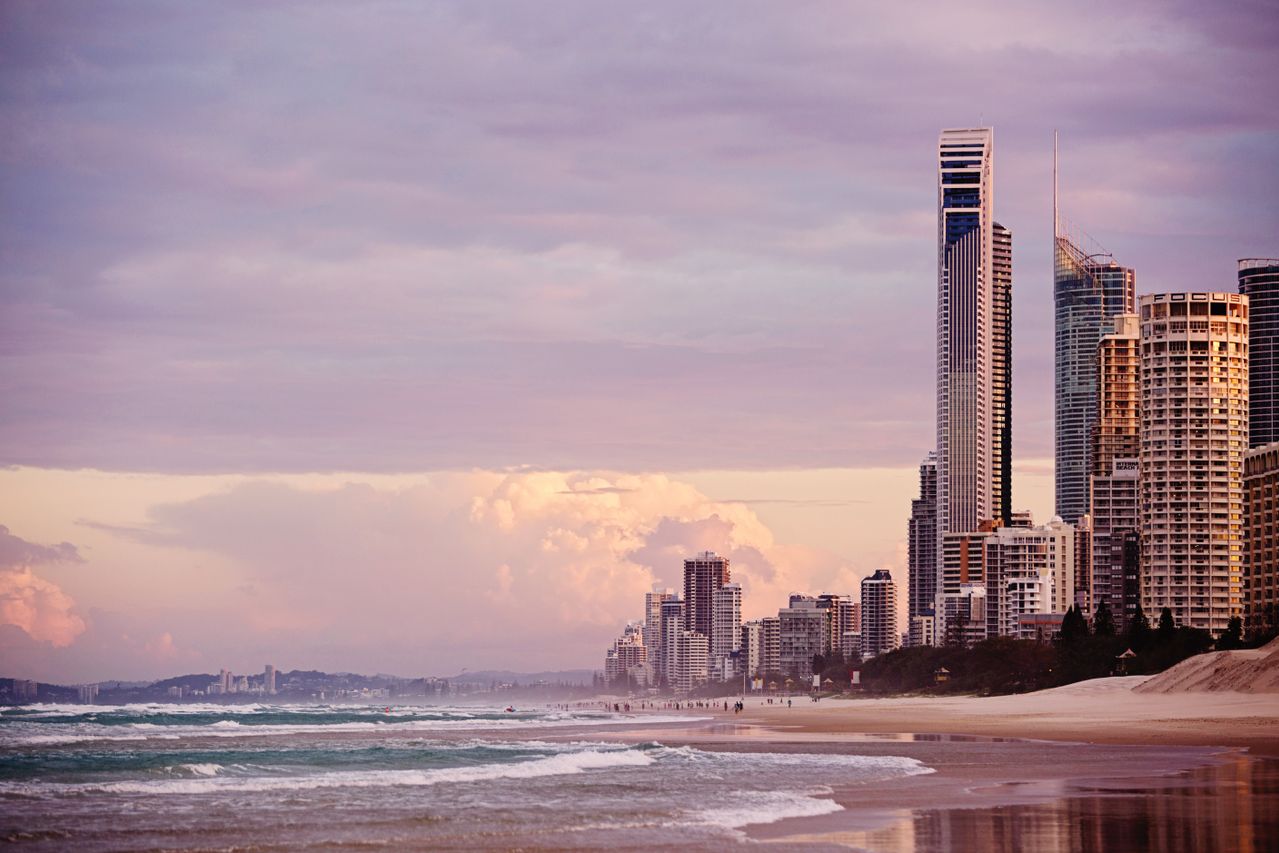
Most travelers arrive on the Gold Coast with one destination in mind: those world-famous stretches of sand that curve along Queensland's eastern edge.
The beach life here is undeniable, with surfers catching perfect breaks and families building sandcastles under brilliant blue skies. Yet after spending time exploring this coastal paradise, I discovered something unexpected.
The real story of this region unfolds inland, where rainforest canopies tower overhead and small communities reveal Australia's diverse character in ways the beachfront resorts never could.
My curiosity took over after four days of coastal living. I packed a small bag, rented a car, and headed west, following signs that pointed toward the hinterland. Within thirty minutes, the glittering high-rises faded in my rearview mirror, replaced by winding roads that climbed into cooler mountain air.
Ancient Forests and Forgotten Worlds
Nestled just 30 minutes from the coastline, the Gold Coast's lush hinterland is often referred to as "The Green Behind The Gold," featuring dense subtropical rainforests and fertile farming grounds. The transformation felt immediate and profound. Where salt air and sunscreen once dominated my senses, I now breathed in the rich, earthy scent of eucalyptus and moss-covered bark.
Much of the national parks are UNESCO World Heritage-listed as part of the Gondwana Rainforests of Australia. Standing beneath trees that have witnessed millennia of change, I felt the weight of deep time pressing against modern existence.
The ancient Gondwana rainforest includes Antarctic beech trees dating back over 3,000 years, their gnarled roots gripping volcanic soil like weathered hands.
I followed a trail through Springbrook National Park, where climate responsive building practices have become increasingly important as Australia adapts to environmental shifts. The forest opened onto cascading waterfalls that tumbled into emerald pools, their mist catching afternoon light in prismatic displays. Every turn revealed new layers of biodiversity that felt worlds apart from the coastal energy I'd left behind.
Building Dreams in the Hills
What surprised me most during my inland exploration was discovering how many people have chosen to make this green corridor their permanent home. The hinterland communities blend rural tranquility with proximity to coastal conveniences, creating an appealing lifestyle balance. During a conversation with a local cafe owner in Tamborine Mountain, I learned about the growing trend of families relocating from crowded urban centers to these elevated plateaus.
The construction landscape here differs markedly from coastal developments.
There were 243,864 total sector dwellings under construction across Australia in the March quarter, of which 90,972 were new houses, reflecting sustained demand for residential building nationwide. In the Gold Coast region specifically, the appeal of custom-built homes has attracted attention from builders and owner-occupiers alike.
The cafe owner mentioned how several neighbors had pursued kit homes Gold Coast options, drawn by the flexibility of steel-frame construction that handles the region's humidity and termite challenges better than traditional timber.
These engineered solutions suited the steep terrain and dense vegetation that characterize hinterland blocks, where conventional building methods often struggle.
Sustainable housing refers to the design, construction, and operation of living spaces that have minimal negative environmental impact, incorporating energy efficiency, water conservation, waste reduction, and renewable materials. The hinterland's building choices reflect this growing awareness, with many homeowners prioritizing materials and designs that complement rather than dominate the natural setting.
Food Culture Rooted in Place
Beyond architecture and ancient trees, the hinterland revealed an unexpected culinary depth. Small-scale farms dot the mountainsides, producing everything from macadamia nuts to passionfruit, coffee cherries to artisan cheeses. I stopped at a roadside market where a fourth-generation farmer sold produce grown on terraced slopes his great-grandfather had cleared by hand. The tomatoes tasted like concentrated sunshine, their flavor worlds removed from supermarket varieties.
This emphasis on regional ingredients reminded me of broader patterns in food-driven travel experiences that connect visitors to local culture through taste. The hinterland's restaurants and cafes source ingredients within kilometers of their kitchens, creating menus that shift with seasonal availability. One chef explained how she'd built her entire evening service around what arrived fresh that morning, a practice that honors both environmental sustainability and flavor intensity.
Australia's diverse climate zones present unique challenges and opportunities for architects and designers, from the scorching heat of the Outback to mild coastal regions and chilly southern winters.
These climatic variations extend to agricultural possibilities as well, with the Gold Coast hinterland's cooler temperatures and higher rainfall supporting crops that struggle at sea level. The microclimate creates a productive agricultural zone that feeds both local communities and coastal restaurants seeking quality ingredients.
The Pull of Elevation
Standing at one of the numerous lookout points that punctuate the mountain roads, I watched the afternoon light paint the coastline in shades of amber and rose. From this elevated perspective, the beaches that had initially drawn me to the region appeared as thin ribbons of sand, beautiful but ultimately simple compared to the layered complexity of the inland terrain stretching toward the horizon.
The Gold Coast hinterland's scenic attractions and guesthouses have developed a vibrant tourism industry, with visitor surveys indicating the area is one of Queensland's most significant tourist destinations. Yet despite this recognition, the hinterland remains relatively undiscovered compared to its coastal counterpart, offering a quieter alternative for those willing to venture beyond conventional itineraries.
The communities I encountered shared a common thread: residents who'd consciously chosen elevation over ocean views, forest sounds over wave crashes, and seasonal change over perpetual summer. Their stories revealed the Gold Coast as a region of surprising contrasts, where ancient landscapes coexist with modern amenities, and where the pursuit of space and natural connection drives decisions as much as beach proximity.
A Different Kind of Discovery
My time beyond the beaches reshaped my understanding of this corner of Australia. The Gold Coast I initially knew through tourism brochures represented only a fraction of what the region offers. The hinterland adds depth, complexity, and unexpected beauty to a destination often reduced to surf culture and theme parks.
Experts increasingly acknowledge that while reducing greenhouse gas emissions remains crucial, designing buildings that function in a changing climate has become equally important, examining how to adapt the built environment to a world significantly different by century's end. This forward-thinking approach resonates throughout the hinterland, where residents balance preservation of natural heritage with practical considerations of modern living.
The forests, farms, and mountain communities revealed themselves slowly, requiring patience and genuine curiosity rather than the instant gratification of coastal tourism.
This rhythm felt appropriate for a landscape shaped by geological time rather than human schedules. Every winding road led to new discoveries, from hidden waterfalls to artisan workshops, from wildlife encounters to conversations with locals whose connection to place ran generations deep.
What I found beyond the beaches wasn't simply an alternative to coastal attractions. It was a fundamental reimagining of what the Gold Coast represents, a recognition that genuine character often emerges in the spaces between obvious destinations.
The hinterland taught me that the most memorable travel experiences frequently require stepping away from established paths, trading certainty for exploration, and allowing landscapes to reveal themselves on their own terms rather than ours.