

















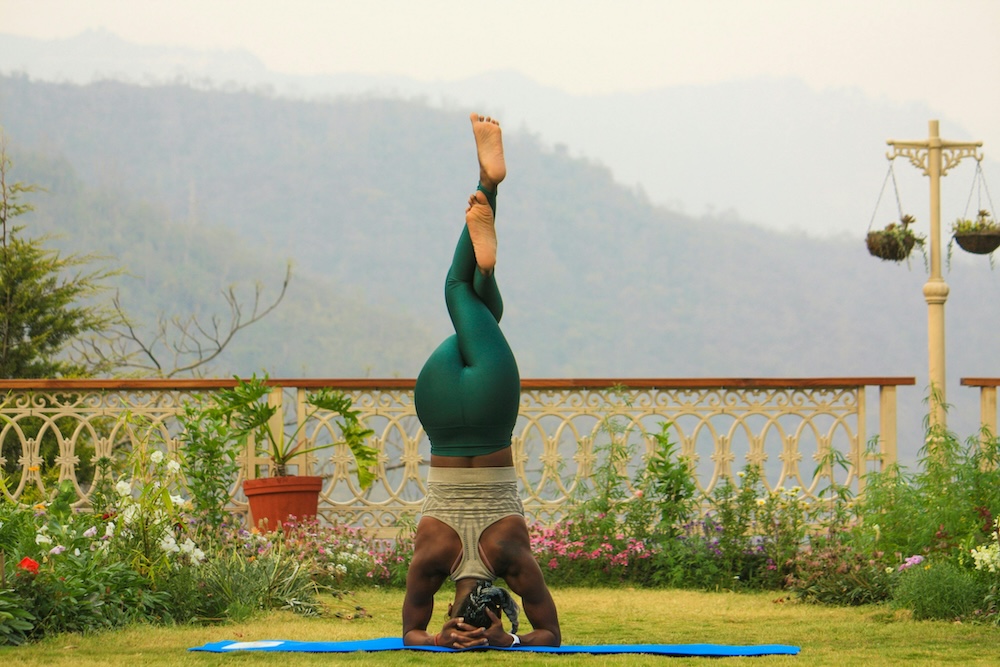
Pranayama, which is a Sanskrit word for 'breathing exercises,' is the practice of breath control and breathing technique in yoga. While Asana which represents the physical aspect of the yoga system based on postures with postures that everyone knows as yoga is the practice of the physical part of yoga, the practice of Asana and Pranayama forms the bottom-line or foundation of the Yogi's life.
Pranayama or breathing, being the first and most primal of all our acts, the practice of it usually is a matter included in intermediate and advanced stages of yoga. Regarding those who have just started practicing Yoga, it is certain that they first show us Yoga and in a couple of years, they will be good to go asking for Pranayama, which is more complex after a more suitable stage of Asana practice.
tihttps://www.youtube.com/watch?v=JoDKbXEUrvQ
Basic Concepts: The 4 Phases of Breathing or Pranayama in Yoga.
5 Benefits of the 4 Phases of Breathing or Pranayama in Yoga.
Pranayama can be defined as the discipline involving the control and regulation of the breath. It includes techniques of breathing which are further split into four different stages. Each of these stages has a number of advantages to both your physical and mental health as well as other aspects of your life. As such, here are five major benefits that you could obtain from employing the four stages of pranayama into your yoga practice:
1. Enhances mental clarity and focus.
The first phase of pranayama, known as Puraka or inhalation, is all about controlled and deep breathing. This focused attention on inhalation not only relaxes your mind but also provides better mental clarity and focus. Besides, you can also drive your full attention to your breath in which way you can feel you are better concentrated and mentally faster both while practicing the yoga and in everyday life.
2. Promotes physical relaxation and stress reduction.
The second phase of pranayama, called Rechaka or exhalation, is sorry to be rather slow by controlled a method. This part of the procedure allows the practitioner to expel all the pent-up tension and stress from his body. By carrying out a slow and conscious physical act - the exhalation - you may engage your parasympathetic nervous system which is a part of thestress response and then you induce a relaxation response.
3. Balances energy and emotions.
The third phase of pranayama, known as Kumbhaka or breath retention, is the process in which there is a temporary break shortly above or under the surface of the air. This step is used so that the body of the person can speak to us, that is to say that, seeing us in this state, the body is between the lines of sympathetic and parasympathetic. According to the principles of physiology and energy, it is possible to say that more energy is available to those who are less controlled and relaxed from yoga, more harmonization in mood and the body as a whole by those who are in some as was also said.
4. Strengthens the respiratory system.
The four techniques of pranayama have a combined beneficial effect in the respiratory system. A deep breath stretches the lungs, thereby, increases lung capacity, and thus, gives more oxygen to the body. During exhalation, the air is the medium for the expulsion of toxins and other waste products from the body, this process leads to the cleanliness of the respiratory system and hence keeping it healthy. When practiced safely and under the guidance of an expert, breath retention can increase lung elasticity and thus enhance the overall respiratory health.
5. Cultivates self-awareness and mindfulness.
Pranayama practice is a way to breathe that makes one be more mindful and introspective. The observation of the breath and its different stages by the practitioner is a path to self-awareness. As a result of pranayama, one is more conscious of oneself even when one is not present, which helps one to understand one's thoughts, emotions, and physical experiences better. Opening up throught pranayama and being mindful is a way to experiencing much inner growth which can make us emotionally stronger and also more acquainted with our inner world.
Tips
Using the four phases of yoga breathing or pranayama in your reflection can open your mind and give you various vibes of goodness both mentally and physically. If you are someone who practices breathing exercises in yoga, then it is a great way to develop your mental skills and create a stress relief zone. Also, it makes you have better functioning of the respiratory system and self-control, knowing one's awareness and skilfulness, and prevent disease onset. This pranayama process can infuse clarity for mental health and mind-body wellness, thus it becomes an integral part of your overall health condition.
1. What is the process of breathing in pranayama?
To practice pranayama, people take deep breaths through their nose, allowing this air to fill their lungs completely, and then exhale progressively and quietly.
2. What is the order of breathing for pranayama?
Usually, the steps involved in pranayama's breathing exercise are inhalation, retention, and exhalation, in that specific order that is set according to the activity being done.
The four areas of breathing, or pranayama, in yoga are certain techniques that are very vital and can greatly influence our health in the physical, mental, and spiritual aspects. If we recognize the processes of our breathing and perform these techniques regularly, we will be able to experiment with some of a variety of good things such as relaxation, reduction of stress, improvement in the level of concentration, uplift in energy, and deep inner connection. Whether we are novice or old hands, the involvement of pranayama in our yoga practicegives us the right of access to the healing power of our breath and we can strengthen the inner self, thus creating more peace and wellness in life. Come, therefore, let's adopt the four phases of breathing and then sail through self-discovery and self-healing via pranayama.